
Two-Syllable Words Worksheets
These worksheets build early reading skills by helping students hear, segment, and blend syllables in common words. These free, ready-to-print PDF pages are made for immediate classroom use in small groups, centers, or independent practice. Students practice phonological awareness, decoding readiness, and spelling connections through syllable counting, chunking, and word building.
About This Collection of Worksheets
Two-syllable word work is a key step in Grade 1 as students move from single-syllable decoding to reading longer words with confidence. When students can hear and work with syllables, they are better prepared to decode unfamiliar words, map sounds to print, and build automaticity-skills emphasized in foundational reading standards such as RF.K.2.b and RF.1.3. This collection focuses on treating syllables as meaningful sound units students can count, segment, and blend.
These worksheets fit naturally into phonics instruction, literacy centers, morning work, homework practice, RTI support, or quick assessment checks. Activities range from clapping and sorting to highlighting, circling, and completing word parts, giving teachers multiple ways to reinforce the same core skill. Several pages also bring syllable awareness into connected text and picture matching, which helps students apply listening skills to real reading tasks.
All printables are designed with clean spacing, clear directions, and low-ink formatting that works well in black-and-white. The layouts support early learners who need visual structure and predictable routines. With minimal prep, teachers can use these pages to build consistent syllable routines that strengthen both reading and writing outcomes.
Paul’s Teacher Tip
Start each lesson with a quick clap-and-say routine so students hear and feel the syllables before they see them on paper. Encourage students to always say the word out loud before marking or writing-this prevents guessing based on spelling patterns. For extra support, model how to “tap and pause” between syllables instead of rushing through the word. You can also turn a few examples into partner work where students check each other’s syllable breaks. As students improve, challenge them to spot two-syllable words during read-alouds to connect this skill to real reading.
Worksheet Collection Skill Spotlights
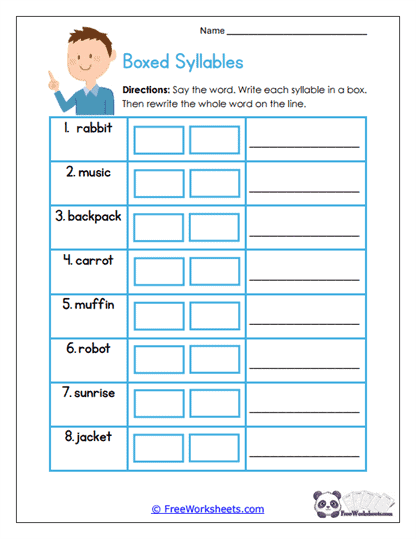
Boxed Syllables
• What Kids Do – Students say a word, write each syllable in its own box, then rewrite the full word.
• Target Skill – Builds syllable segmentation and accurate word reconstruction.
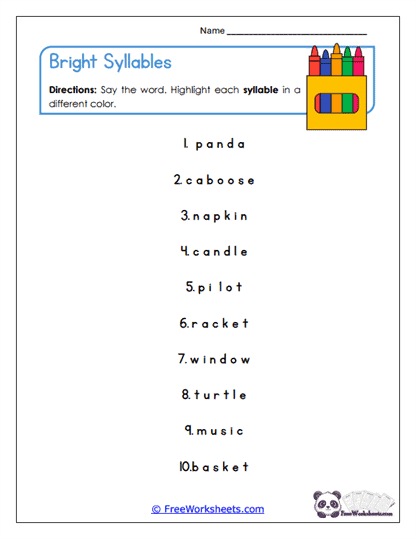
Bright Syllables
• What Kids Do – Students say each word aloud and highlight each syllable in a different color.
• Target Skill – Develops syllable identification using multisensory reinforcement.
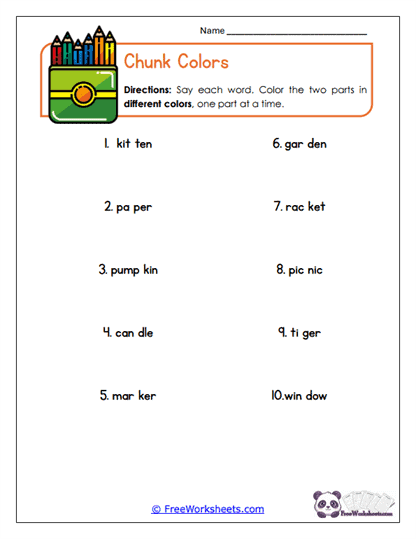
Chunk Colors
• What Kids Do – Students divide words into two syllables and color each chunk to show the split.
• Target Skill – Strengthens syllable chunking and sound-based word analysis.
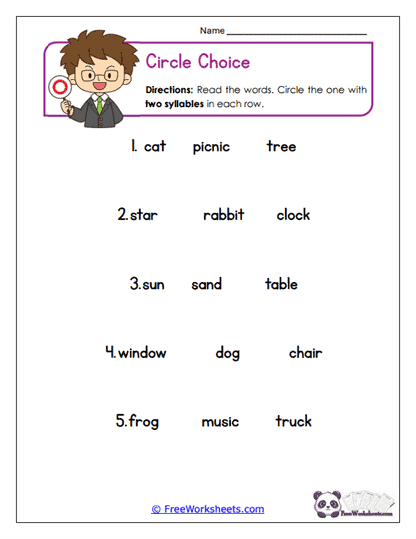
Circle Choice
• What Kids Do – Students say word options aloud and circle the one with two syllables.
• Target Skill – Builds auditory discrimination of syllable count.
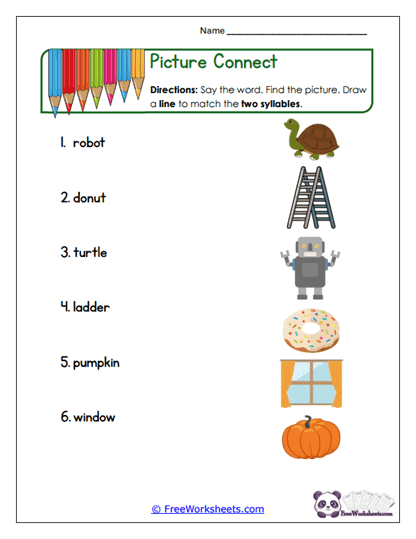
Picture Connect
• What Kids Do – Students read each word, say it aloud, and match it to the correct picture.
• Target Skill – Reinforces syllable awareness and word-to-meaning connections.
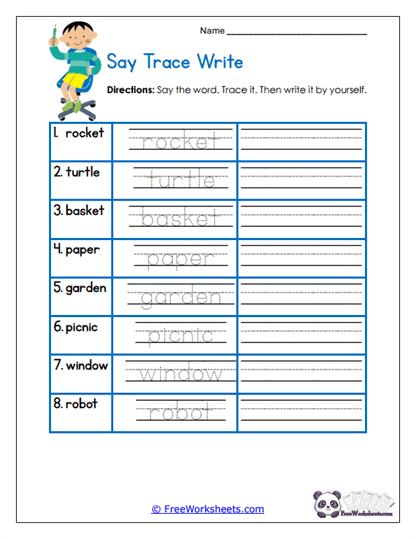
Say Trace Write
• What Kids Do – Students say each word, trace it, and then write it independently.
• Target Skill – Supports syllable fluency, handwriting, and word memory.
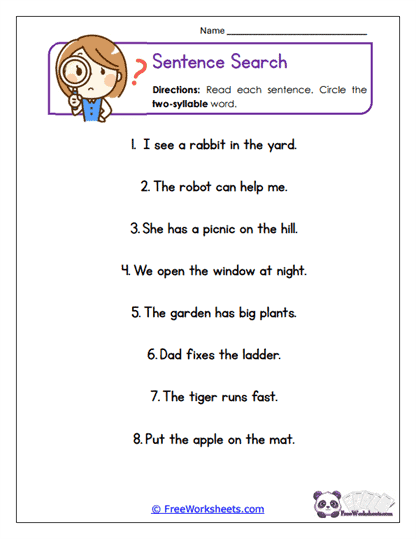
Sentence Search
• What Kids Do – Students read short sentences and circle the word with two syllables.
• Target Skill – Develops syllable recognition within connected text.
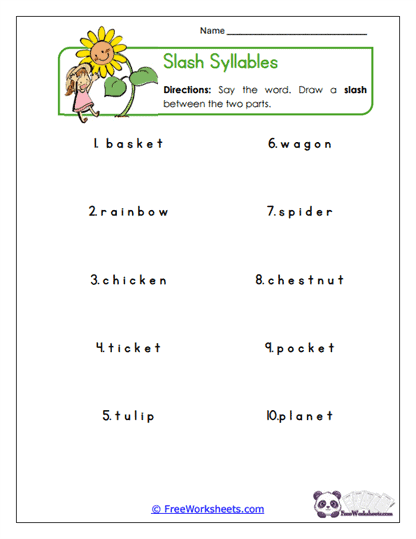
Slash Syllables
• What Kids Do – Students read words and draw a slash to show where the syllables divide.
• Target Skill – Builds understanding of syllable boundaries for decoding.
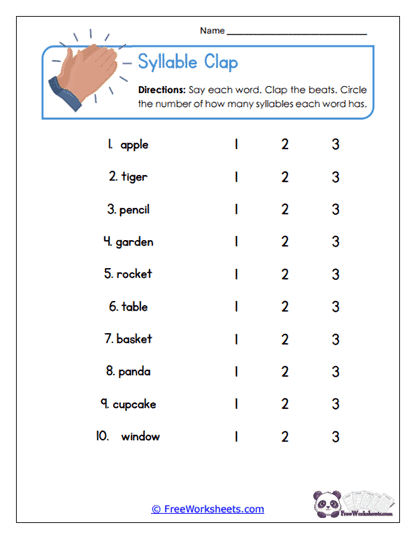
Syllable Clap
• What Kids Do – Students say each word, clap the syllables, and circle the correct number.
• Target Skill – Strengthens syllable counting through kinesthetic learning.
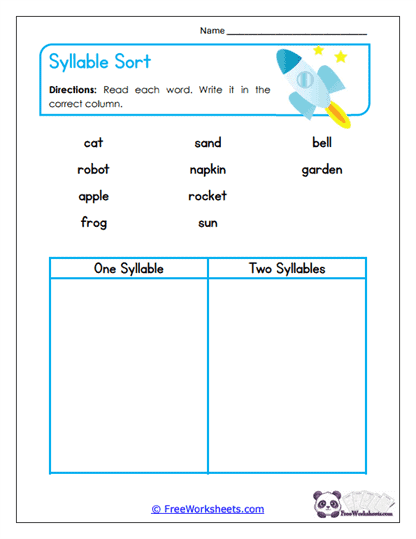
Syllable Sort
• What Kids Do – Students read words and sort them into one- or two-syllable columns.
• Target Skill – Builds classification and accurate syllable counting.
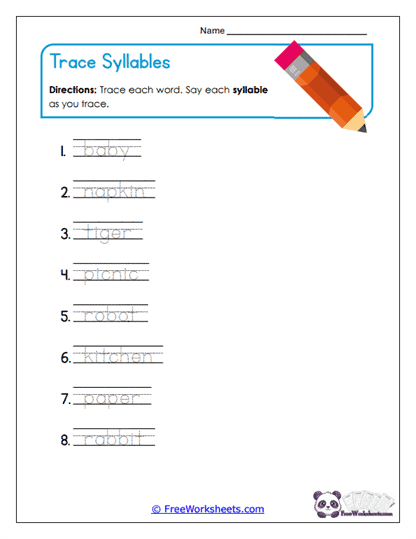
Trace Syllables
• What Kids Do – Students trace words while saying each syllable aloud, then rewrite the word.
• Target Skill – Connects oral segmentation to written fluency practice.
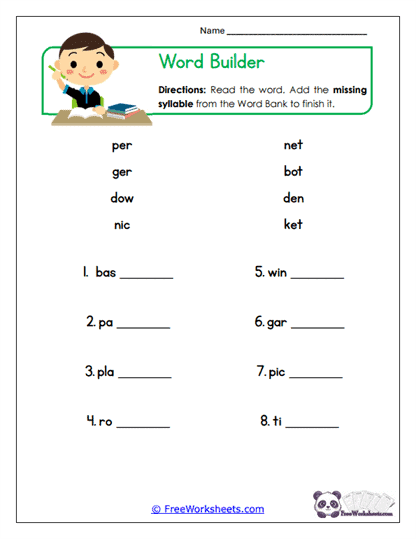
Word Builder
• What Kids Do – Students choose the correct syllable to complete a word and say the full word aloud.
• Target Skill – Develops syllable blending and word construction skills.