
Grade 1 Worksheets
These free, ready-to-print PDF worksheets are designed for immediate classroom use in centers, small groups, homework, or independent practice. Students build phonological awareness, decoding fluency, comparison vocabulary, and subtraction reasoning within 10.
About This Collection of Worksheets
In Grade 1, students transition from foundational kindergarten exposure to more structured, standards-driven expectations in both English Language Arts and Mathematics. This year marks a critical shift: children move from emerging skills to purposeful application, building the academic habits and conceptual understanding that support long-term success.
In English Language Arts, first graders strengthen phonological awareness and advance from simple consonant-vowel-consonant decoding to confidently reading and writing longer words with blends, digraphs, vowel teams, and inflectional endings. Students develop fluency by practicing high-frequency words and reading grade-level texts with accuracy, appropriate rate, and expression. As their decoding becomes more automatic, they focus more deeply on comprehension-retelling stories, identifying key details, describing characters and settings, comparing texts, and distinguishing between fiction and nonfiction.
Beyond reading, first graders grow as writers. They learn to compose opinion pieces with reasons, informative texts that name and explain topics, and narrative stories with clear sequences of events. They practice using capitalization, punctuation, and conventional spelling patterns while expanding sentences with adjectives and conjunctions. Grammar instruction reinforces understanding of nouns, verbs, adjectives, sentence structure, and subject-verb agreement. Speaking and listening skills are also emphasized as students participate in collaborative conversations, ask and answer questions, and present ideas clearly using complete sentences.
In Mathematics, first graders build on number sense to develop deeper conceptual understanding. They extend counting and place value skills to 120, understand that two-digit numbers represent tens and ones, and compare numbers using greater than, less than, and equal to. Students develop fluency with addition and subtraction within 20, using strategies such as making ten, counting on, decomposing numbers, and understanding subtraction as finding an unknown addend or determining the difference.
Problem-solving becomes more structured as students interpret word problems in all result-unknown, change-unknown, and start-unknown formats. They represent thinking using drawings, number bonds, equations, ten frames, and number lines. Measurement concepts expand to comparing lengths indirectly and directly, telling and writing time to the hour and half hour, and organizing data into charts and graphs. Students explore attributes of shapes, compose and partition two-dimensional and three-dimensional figures, and reason about equal shares as a foundation for fractions.
Throughout both subject areas, Grade 1 emphasizes:
- Building automaticity while maintaining conceptual understanding
- Explaining thinking verbally and in writing
- Applying skills across varied contexts
- Developing independence and academic confidence
Mastering phonemic awareness, decoding patterns, sentence construction, addition and subtraction strategies, place value concepts, and problem structures at this stage strengthens reading comprehension, mathematical reasoning, and readiness for multi-step tasks in later grades.
A Look At The Grade 1 Categories
Language Arts
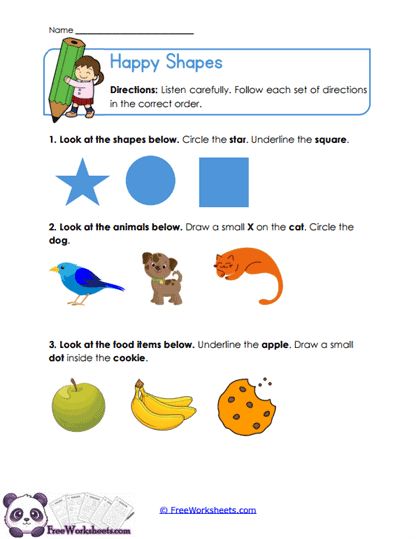
This collection helps students follow multi-step directions, ask and answer questions, retell stories, and express ideas in complete sentences. Through structured listening tasks, guided speaking prompts, sentence frames, and interactive activities, students build attention, memory, expressive clarity, and respectful communication habits. With clear layouts and minimal preparation required, these printables integrate easily into daily instruction while supporting confident, capable communicators.
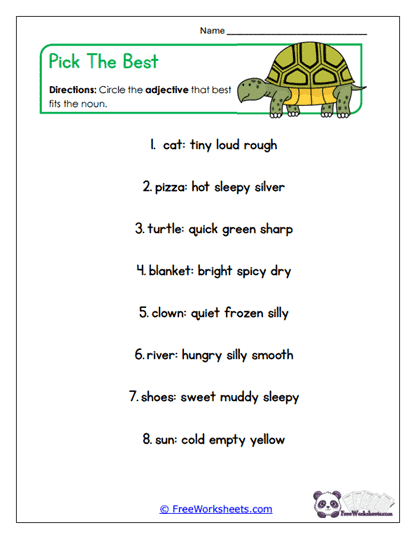
This collection helps students build a strong foundation in grammar by learning to identify and use nouns and adjectives in meaningful contexts aligned with Common Core standards. Through engaging activities like sorting, matching, color-coding, revising, and sentence expansion, students move from recognizing naming and describing words to applying them confidently in their own writing. With clear directions, simple layouts, and visual supports, these printables integrate easily into daily instruction while reinforcing essential language skills.
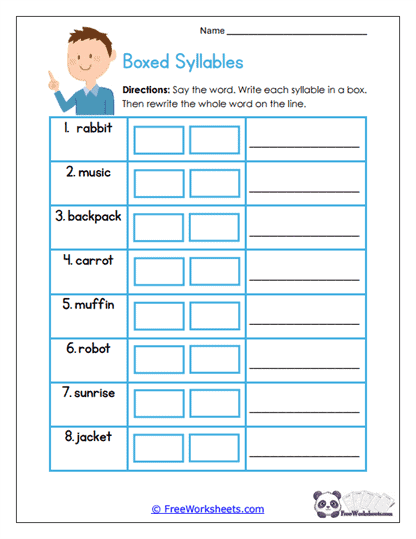
These worksheets strengthen early reading skills by helping students hear, segment, and blend syllables in familiar words. The free, ready-to-print PDF pages are designed for easy classroom use in small groups, literacy centers, or independent practice. Through syllable counting, chunking, and word building, students build phonological awareness, decoding readiness, and spelling connections.
Math
Comparison Word Problems Up to 10
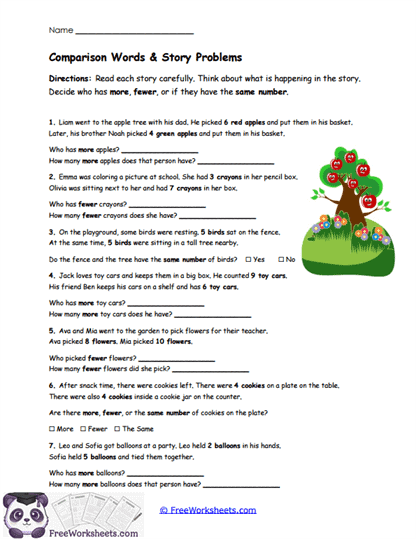
These worksheets help students solve real-world subtraction comparison problems within 10. The free, ready-to-print PDF pages are ideal for immediate classroom use, math centers, or independent practice. Through engaging story problems, students build subtraction fluency, strengthen comparison vocabulary, and develop problem-solving skills.