
About This Worksheet
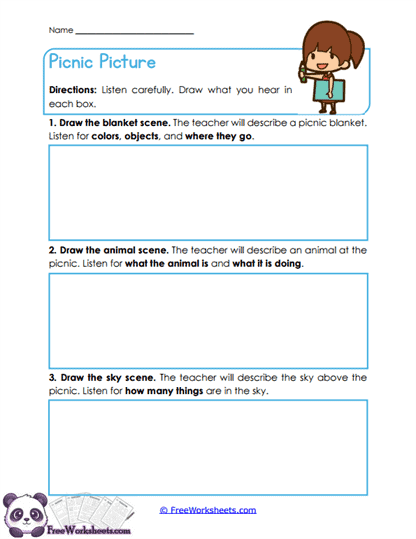
Picnic Picture is a Grade 1 listening and visualization worksheet designed to strengthen auditory processing and descriptive comprehension skills. Students listen to a teacher describe elements of a picnic scene and then draw what they hear in designated boxes. This activity promotes active listening, visualization, and the ability to translate oral language into visual representation. By requiring drawing rather than selecting answers, the worksheet increases cognitive engagement and ensures students truly understand the description.
This worksheet focuses heavily on descriptive listening skills. Students must pay attention to details such as colors, object placement, quantity, and actions. The task strengthens comprehension of spatial vocabulary and descriptive language. These skills are foundational for later reading comprehension and writing development.
Additionally, the worksheet encourages creativity while still maintaining structure. Because students must interpret and draw what they hear, it supports both comprehension and expressive representation. This balance makes it developmentally appropriate and engaging for Grade 1 learners.
Curriculum and Grade Alignment
This worksheet aligns with Common Core SL.1.2, which requires students to ask and answer questions about key details presented orally. It also supports SL.1.3, which involves asking and answering questions to clarify understanding. In TEKS Grade 1 ELAR standards, it supports listening comprehension and oral language processing skills.
The drawing component supports comprehension monitoring. Teachers can assess whether students accurately interpreted the oral description. This makes the worksheet appropriate for formative assessment.
Because it requires multiple listening passes, it builds listening stamina. It is aligned with early literacy standards that emphasize understanding spoken language.
Student Tasks
Students listen carefully to three separate oral descriptions. They draw the picnic blanket scene based on specific color and object details. They then draw an animal scene and finally a sky scene based on numerical clues.
Students must process descriptive vocabulary before drawing. This reinforces careful listening and detail retention. The activity encourages organized visual thinking.
Common Challenges and Misconceptions
Students may forget specific details such as colors or numbers. Others may struggle with spatial placement words. Teachers should pause briefly between sections to allow students to organize thoughts.
Some learners may draw from imagination instead of listening precisely. Reminding students to base drawings strictly on what they heard strengthens comprehension. Modeling one short example can improve clarity.
Implementation Guidance
Read each description slowly and clearly. Consider repeating the description once for support. Encourage students to listen fully before beginning to draw.
This worksheet works well during whole-group instruction or listening centers. It can also be used to assess descriptive language comprehension. Pairing it with a class discussion afterward strengthens understanding.
Details and Features
Includes three structured drawing boxes.
Targets descriptive vocabulary, quantity, and spatial listening.
Encourages visualization and attention to detail.
Designed specifically for Grade 1 listening comprehension development.