
Grade 1 Listening & Speaking Worksheets
These worksheets build strong oral communication and comprehension skills through structured practice. These free, ready-to-print PDF worksheets are designed for immediate classroom use during speaking blocks, morning meetings, or literacy instruction. Students develop active listening, multi-step direction following, sentence expansion, organized retelling, and respectful discussion habits.
About This Collection of Worksheets
Listening and speaking skills in Grade 1 form the bridge between early oral language development and academic communication expectations outlined in Common Core Speaking and Listening standards. At this stage, students are learning to follow multi-step directions, ask and answer questions about key details, retell stories in sequence, and express ideas in complete sentences. These worksheets support that developmental progression by combining structured listening tasks with scaffolded speaking opportunities.
This collection is ideal for whole-group mini-lessons, partner discussions, literacy centers, formative assessments, and small-group intervention. Teachers can use the listening tasks to build attention and working memory while using the speaking prompts to strengthen expressive clarity and confidence. The structured sentence frames and guided formats provide support for emerging speakers, multilingual learners, and students who benefit from predictable routines.
Each printable PDF features clear layouts, organized response sections, and developmentally appropriate language. The activities emphasize complete sentences, respectful turn-taking, and focused listening behaviors. With minimal preparation required, educators can easily integrate these resources into daily instruction to promote confident, capable communicators.
Paul’s Teacher Tip
These worksheets are most powerful when paired with structured talk routines, so build in think-time before students respond. Model strong answers out loud and show what a complete sentence sounds like versus a short response. For students who need support, let them practice with a partner before sharing with the group. You can also use simple hand signals (like holding up fingers) to remind students how many sentences to say. Over time, listen for students who give one-word answers and gently prompt them to “say more” using the sentence frames provided.
Worksheet Collection Skill Spotlights
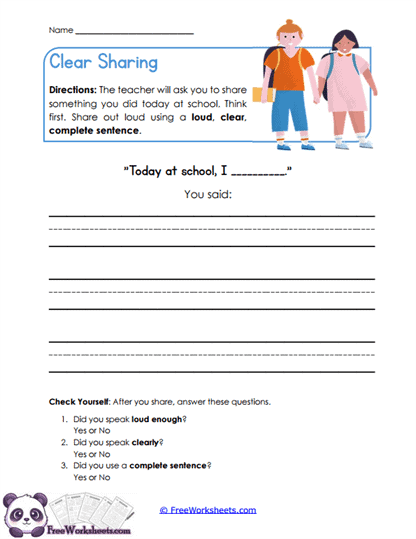
Clear Sharing
• What Kids Do – Students use a sentence starter to share an idea aloud and reflect on how clearly they spoke.
• Target Skill – Builds complete sentence production and speaking clarity.
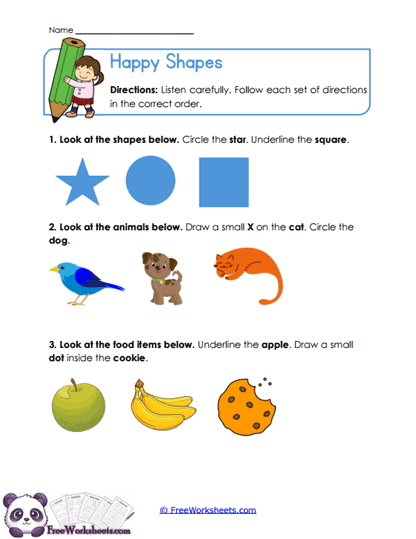
Happy Shapes
• What Kids Do – Students listen to multi-step directions and complete actions like circling and underlining correctly.
• Target Skill – Develops listening comprehension and following multi-step directions.
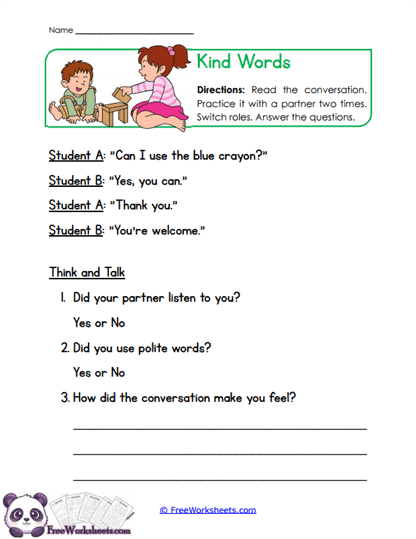
Kind Words
• What Kids Do – Students role-play a short conversation using polite phrases and reflect on their behavior.
• Target Skill – Builds conversational skills, turn-taking, and social language use.
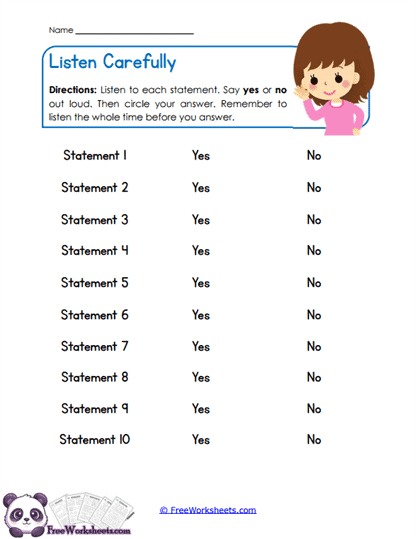
Listen Carefully
• What Kids Do – Students listen to statements and circle yes or no to show if each one is true or false.
• Target Skill – Strengthens auditory processing and response accuracy.
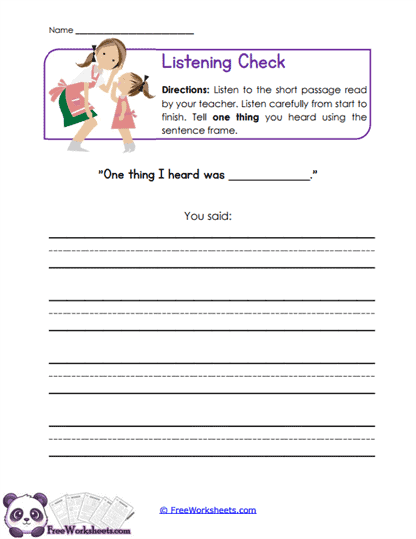
Listening Check
• What Kids Do – Students listen to a short passage and complete a sentence about one detail they heard.
• Target Skill – Builds listening recall and complete sentence responses.
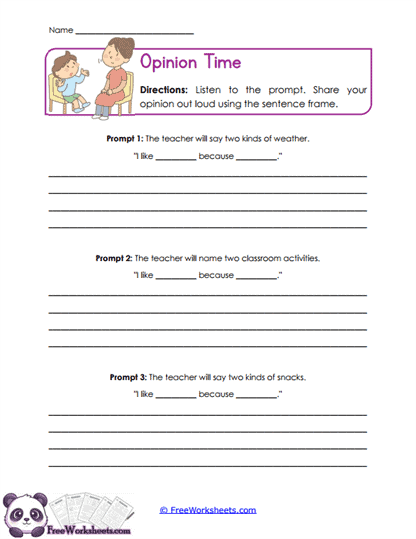
Opinion Time
• What Kids Do – Students share an opinion using a sentence frame and explain their reason.
• Target Skill – Develops opinion expression and reasoning skills.
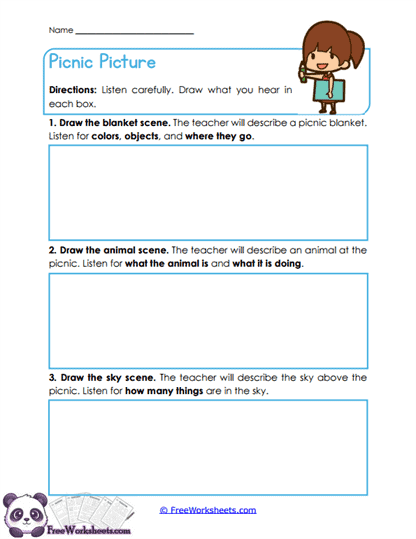
Picnic Picture
• What Kids Do – Students listen to a detailed description and draw the scene based on what they hear.
• Target Skill – Strengthens listening comprehension and visualization.
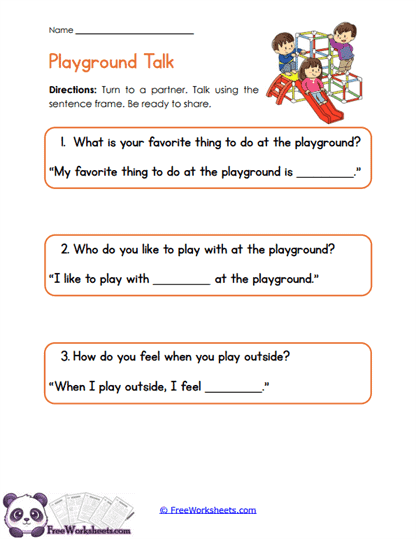
Playground Talk
• What Kids Do – Students answer prompts using sentence frames to talk about familiar playground experiences.
• Target Skill – Builds organized speaking and topic-focused responses.
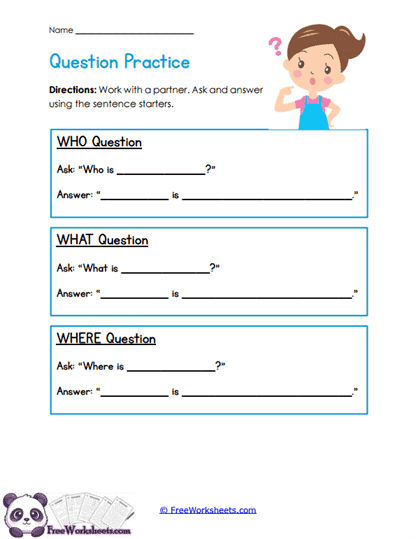
Question Practice
• What Kids Do – Students practice asking and answering who, what, and where questions with a partner.
• Target Skill – Develops question formation and comprehension skills.
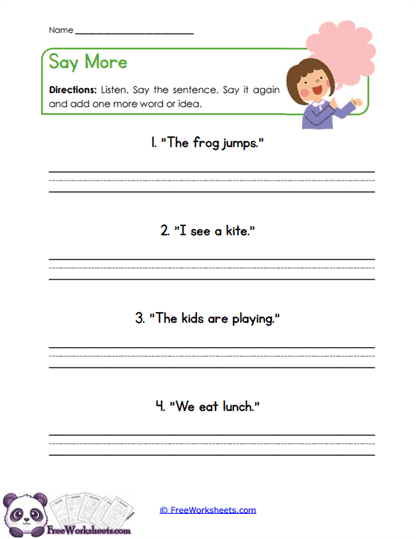
Say More
• What Kids Do – Students expand a simple sentence by adding extra details or descriptive words.
• Target Skill – Builds expressive language and sentence expansion.
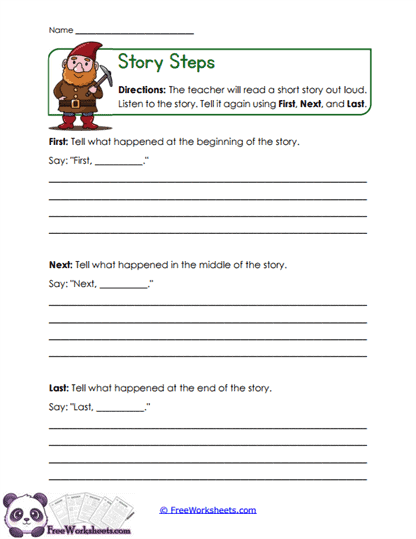
Story Steps
• What Kids Do – Students listen to a story and retell it using First, Next, and Last.
• Target Skill – Develops sequencing and narrative retelling skills.
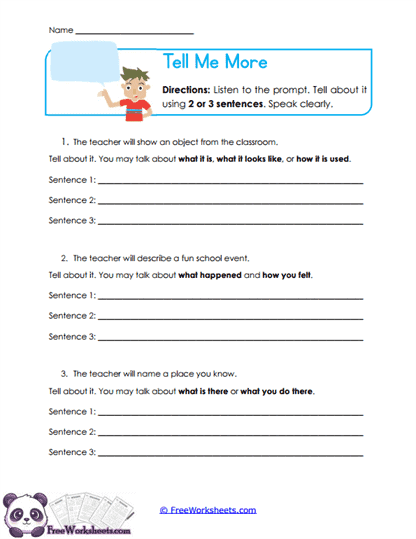
Tell Me More
• What Kids Do – Students respond to prompts using two or three complete sentences about a topic.
• Target Skill – Builds multi-sentence speaking and organized expression.