
Comparison Word Problems Up to 10 Worksheets
These worksheets help students solve real-world subtraction comparisons within 10. These free, ready-to-print PDF worksheets are designed for immediate classroom use and independent practice. Students strengthen subtraction fluency, comparison vocabulary, and problem-solving skills aligned to Common Core standards.
-
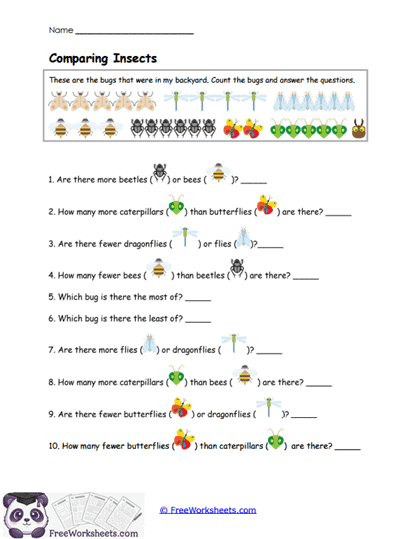
Comparing Insects
-
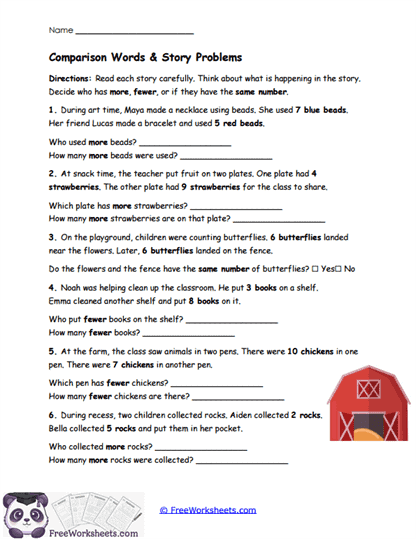
Comparison Story Problems
-
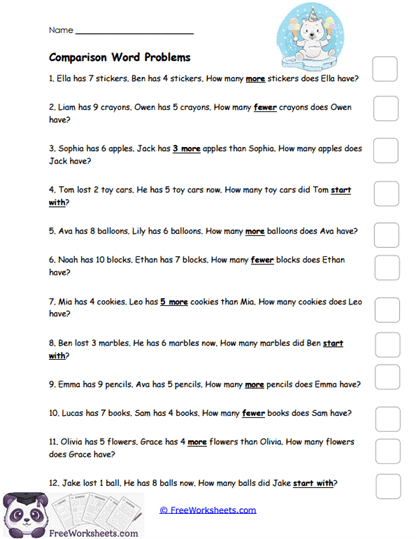
Comparison Word Problems
-
-
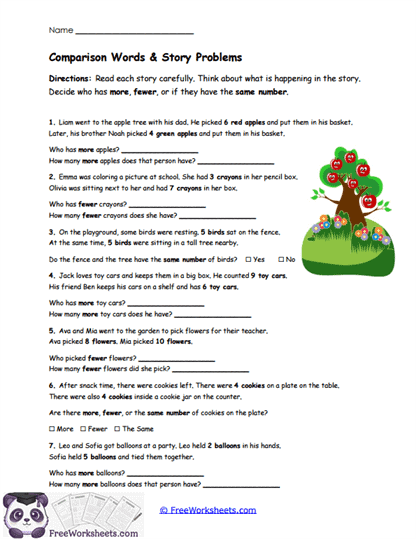
Comparison Words & Story Problems
-
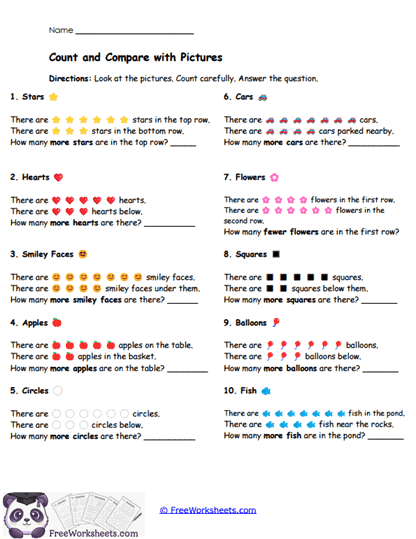
Count and Compare with Pictures
-
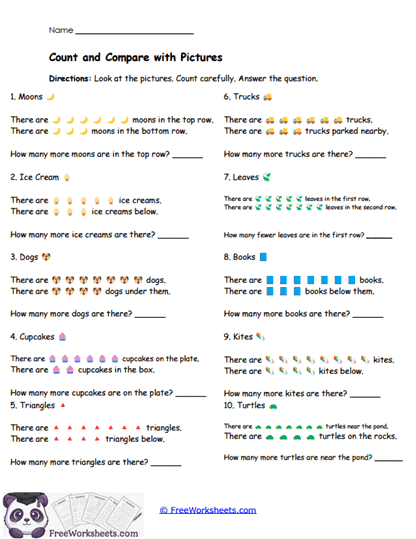
Group and Compare with Pictures
-
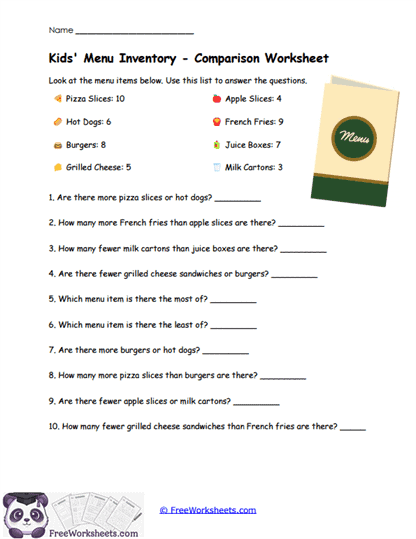
Kids’ Menu Inventory
-
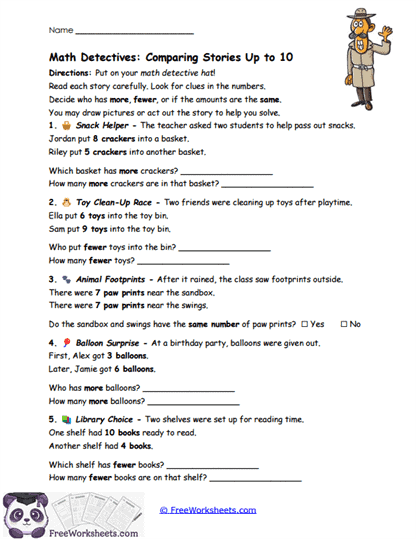
Math Detectives: Comparing Stories
-
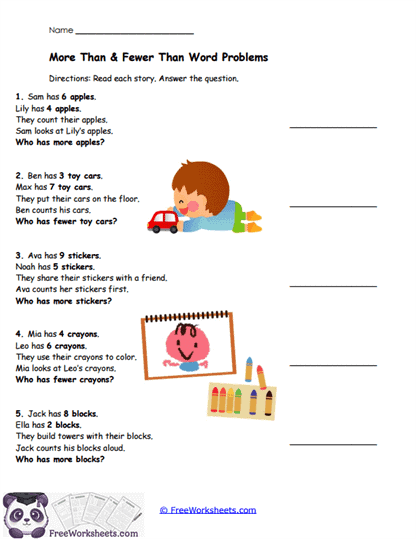
More Than & Fewer Than Word Problems
-
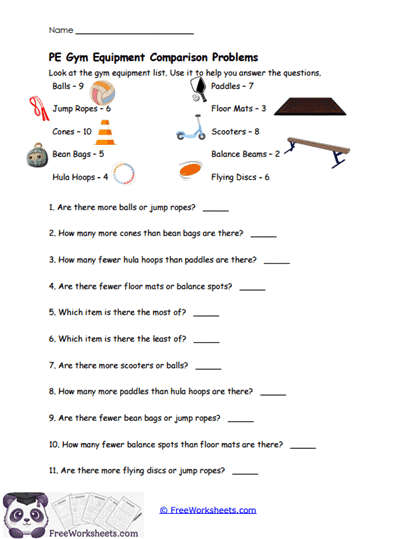
PE Gym Equipment Comparison Problems
-
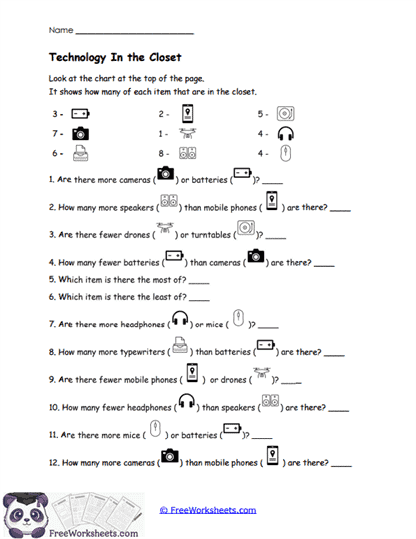
Technology In the Closet
-
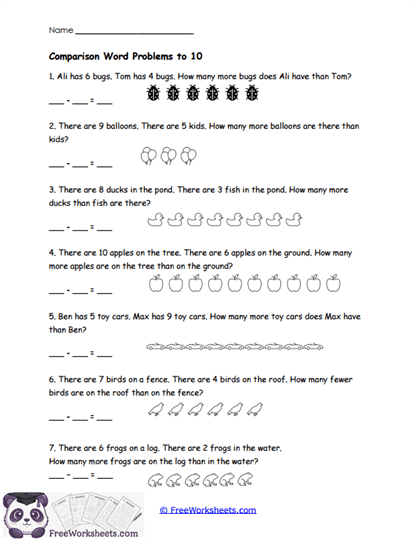
Visual Thought Comparison
About This Collection of Worksheets
Comparison word problems within 10 are a foundational Grade 1 Math skill that deepens students’ understanding of subtraction as finding the difference. Aligned with Common Core standards such as K.OA.A.1 and 1.OA.A.1, these activities help learners interpret “how many more” and “how many fewer” in meaningful contexts. Developing this conceptual understanding supports later fluency with subtraction facts and prepares students for multi-step problem solving in upper grades.
Teachers can use these worksheets for morning work, guided math groups, RTI support, math centers, homework, or quick formative assessments. The variety of picture-based problems, themed data sets, and story scenarios allows students to practice comparison skills in multiple formats. They are especially effective for reinforcing vocabulary such as more, fewer, greater, least, and equal while connecting reading comprehension with math reasoning.
Each page is designed to be printer-friendly, ink-conscious, and easy to implement with minimal prep. Clean layouts reduce visual clutter so students can focus on counting, interpreting, and solving. The accessible format makes these worksheets ideal for whole-class instruction, small groups, or independent practice in both classroom and homeschool settings.
Paul’s Teacher Tip
Comparison problems click faster when students act them out. Use counters, cubes, or even students themselves to model “how many more” physically-line up two groups and match them to see what’s left. Emphasize the language: have students say, “___ has ___ more than ___” before solving. This builds the bridge from concrete understanding to subtraction equations and prevents common confusion between addition and comparison.
Worksheet Collection Skill Spotlights
Comparing Insects
• What Kids Do – Students count groups of insects and compare which has more or fewer, then find the difference.
• Target Skill – Builds counting accuracy and subtraction as comparison within 10.
Comparison Word Problems
• What Kids Do – Students read short word problems and write subtraction equations to show how many more or fewer.
• Target Skill – Develops translating word problems into subtraction equations.
Comparison Words & Story Problems
• What Kids Do – Students read stories and use clue words like more, fewer, or equal to compare amounts.
• Target Skill – Builds understanding of comparison vocabulary in context.
Count and Compare with Pictures
• What Kids Do – Students count two picture groups and determine how many more one has than the other.
• Target Skill – Strengthens one-to-one counting and comparison using visuals.
Kids’ Menu Inventory – Comparison
• What Kids Do – Students analyze menu items, compare quantities, and find differences.
• Target Skill – Develops comparing numbers using simple data sets.
Math Detectives: Comparing Stories Up to 10
• What Kids Do – Students solve themed story problems by comparing quantities and finding differences.
• Target Skill – Builds problem-solving with subtraction in story contexts.
More Than & Fewer Than Word Problems
• What Kids Do – Students read short problems and decide which group has more or fewer.
• Target Skill – Reinforces understanding of comparison language and quantity relationships.
PE Gym Equipment Comparison Problems
• What Kids Do – Students read a chart of equipment amounts and compare categories to find differences.
• Target Skill – Develops interpreting charts and solving comparison problems.
Technology In the Closet
• What Kids Do – Students analyze a visual chart of items and compare which has more or fewer.
• Target Skill – Builds data interpretation and subtraction-based comparison.