
About This Worksheet
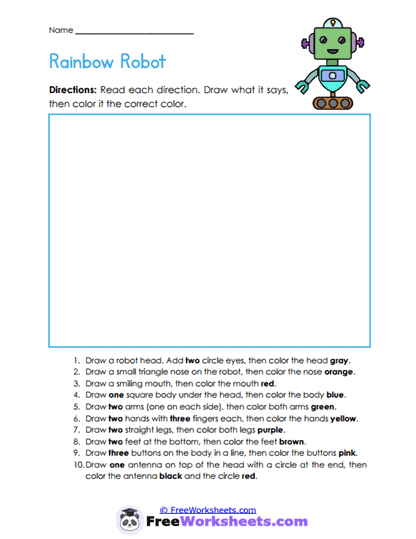
This worksheet is a directed drawing and color-following activity designed to strengthen students’ ability to follow sequential instructions accurately. Students read step-by-step directions to draw specific shapes and then color each part according to precise instructions. Intended for grades 1-3, it builds listening comprehension, color recognition, and spatial reasoning skills. The activity requires learners to interpret both shape-based and color-based instructions carefully. For example, “Draw two straight legs, then color both legs purple” requires attention to sequence and detail. This structured format reinforces executive functioning and careful reading habits.
Curriculum and Grade Alignment
This worksheet aligns with early elementary reading comprehension standards focused on following multi-step written directions. The primary learning objective is improving accuracy when interpreting and executing detailed instructions. Students should already demonstrate basic reading fluency and color identification skills. The content supports Common Core Reading Standards RF.1.4 and RF.2.4 through careful reading and task completion. It also supports foundational geometry standards involving shape recognition. This resource builds attention to detail across academic tasks.
Student Tasks
On this worksheet, students will read ten sequential directions describing how to draw and color a robot. They draw specific shapes including circles, squares, lines, and triangles in designated positions. After completing each drawing step, students color the part according to the instruction. Careful sequencing is required to avoid missing steps. Learners must distinguish between shape instructions and color instructions. The task reinforces reading comprehension through creative application.
Common Challenges and Misconceptions
Students may color parts before fully completing the drawing steps. Some learners might overlook specific color instructions or reverse the sequence. Others may confuse similar shapes such as circles and ovals. Rushing can lead to skipped steps or incorrect placement. Confusion may also occur when directions combine two actions in one sentence. Teachers can encourage students to underline action words before beginning each step.
Implementation Guidance
Teachers can use this worksheet as a directed drawing activity during literacy centers. It works effectively as an assessment of students’ ability to follow written instructions independently. Small-group modeling allows teachers to emphasize sequencing language. Parents and homeschool educators may use it to reinforce careful reading and fine motor skills. Encouraging students to check each step after completion improves accuracy. This activity supports cross-curricular integration between art and literacy.
Details and Features
The worksheet includes a large blank space for the robot drawing. Ten numbered directions clearly outline drawing and coloring steps. Instructions integrate geometry concepts through shape identification. The layout is structured for easy reading and task tracking. The black-and-white printable format supports classroom efficiency. Its engaging robot theme motivates focused participation.