
Classroom Rules & Expectations Worksheets
Students strengthen understanding through structured, skill-based activities. These free, ready-to-print PDF worksheets are designed for immediate classroom use and support consistent behavior instruction. Students build decision-making, social awareness, vocabulary development, and cause-and-effect reasoning skills.
About This Collection of Worksheets
At the primary level, explicit instruction in behavior expectations is essential for building a safe, productive learning environment aligned with Common Core Speaking and Listening standards. Students in kindergarten through third grade are developing self-management, responsible decision-making, and collaborative discussion skills that directly support academic success. These worksheets reinforce foundational social-emotional competencies while strengthening comprehension, reasoning, and communication abilities.
This collection supports classroom meetings, morning work, RTI behavior interventions, small-group SEL lessons, homework reflection, and formative assessment checks. Teachers can use the activities to model expectations, facilitate peer discussion, and guide students in analyzing real-world classroom scenarios. The structured formats also encourage accountable talk and written reflection, reinforcing participation norms outlined in SL.K.1, SL.1.1, and SL.2.1.
Each worksheet is designed with clean layouts, ink-friendly black-and-white formatting, and developmentally appropriate language for primary learners. The printable PDFs require minimal prep, making them ideal for beginning-of-year routines or ongoing reinforcement throughout the school year. Clear directions and structured response areas ensure accessibility for emergent readers and writers while maintaining academic rigor.
Paul’s Teacher Tip
Don’t just teach rules-teach the why behind them. When students understand how their actions affect others, they’re more likely to internalize expectations. Use quick role-play or “what would you do?” discussions before worksheets so students can talk through choices first. Also, revisit these activities regularly-not just at the start of the year-to reinforce habits and build a consistent classroom culture.
Worksheet Collection Skill Spotlights
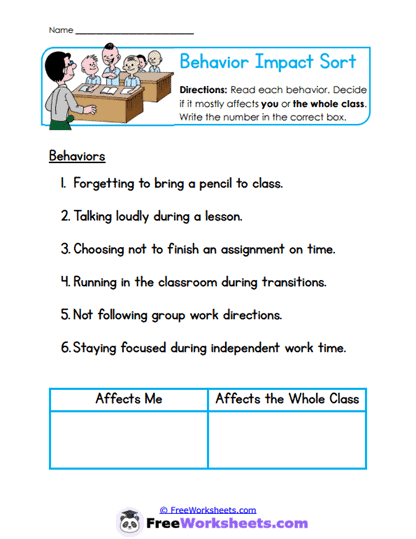
Behavior Impact Sort
• What Kids Do – Students sort behaviors into “affects me” or “affects the whole class.”
• Target Skill – Builds understanding of how actions impact individuals vs. groups.
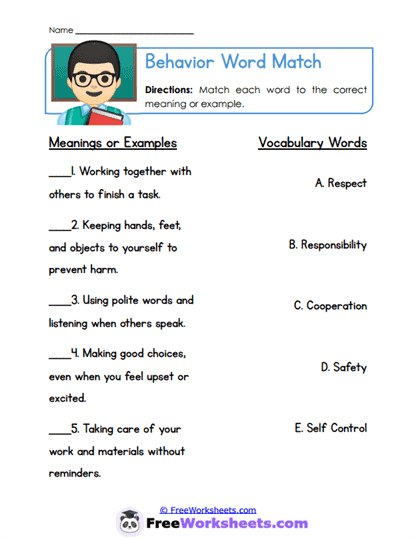
Behavior Word Match
• What Kids Do – Students match behavior words like respect and responsibility to their meanings.
• Target Skill – Develops understanding of key SEL vocabulary.
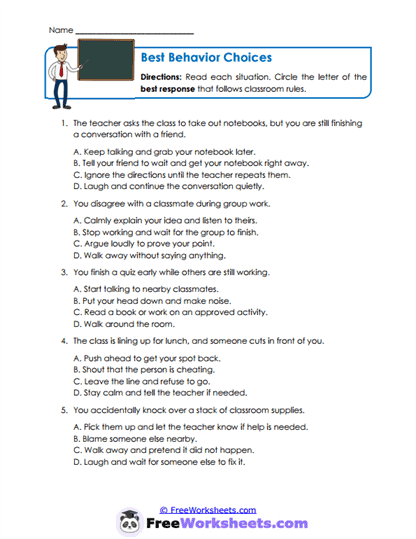
Best Behavior Choices
• What Kids Do – Students read scenarios and choose the best behavior from given options.
• Target Skill – Builds decision-making and responsible choice selection.
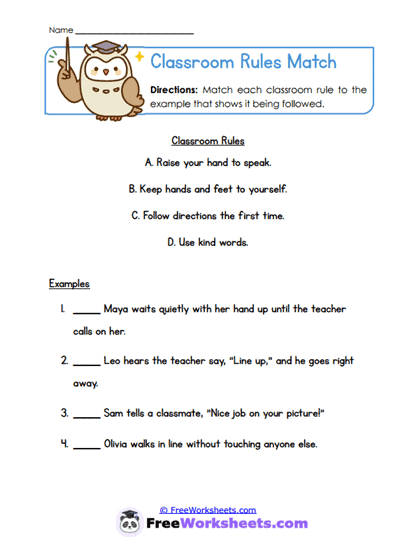
Classroom Rules Match
• What Kids Do – Students match classroom rules to real-life behavior examples.
• Target Skill – Strengthens understanding of how rules apply in action.
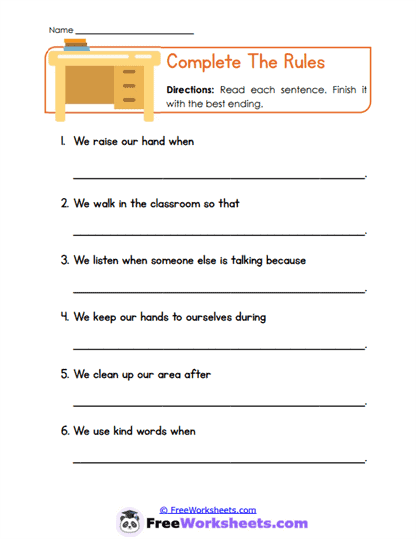
Complete The Rules
• What Kids Do – Students finish sentence starters about classroom rules.
• Target Skill – Develops ability to explain rules using complete thoughts.
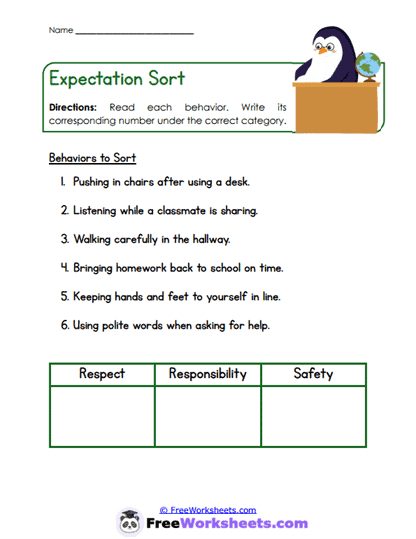
Expectation Sort
• What Kids Do – Students sort behaviors into categories like respect, responsibility, and safety.
• Target Skill – Builds classification and reasoning about behavior expectations.
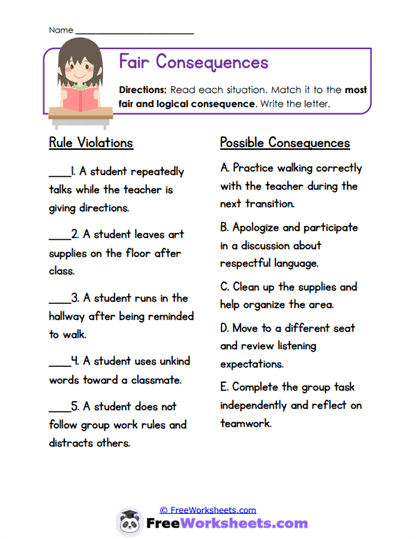
Fair Consequences
• What Kids Do – Students match behaviors with logical, fair consequences.
• Target Skill – Develops understanding of accountability and cause-effect.
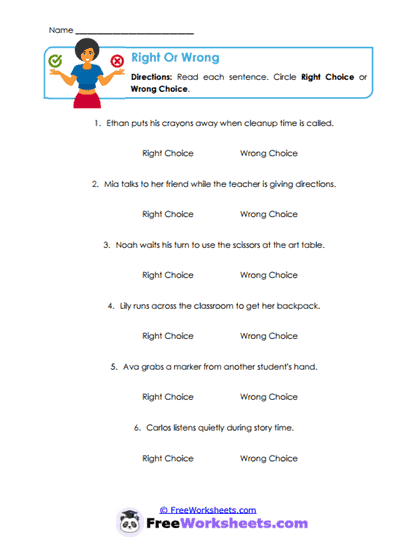
Right Or Wrong
• What Kids Do – Students decide whether behaviors are appropriate or not.
• Target Skill – Builds recognition of expected vs. unexpected behavior.
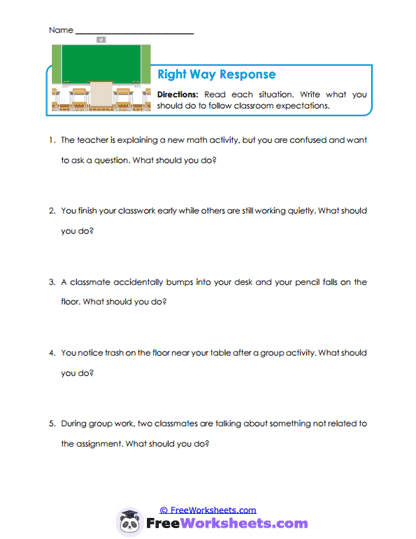
Right Way Response
• What Kids Do – Students read scenarios and write appropriate responses.
• Target Skill – Develops problem-solving and constructive behavior responses.
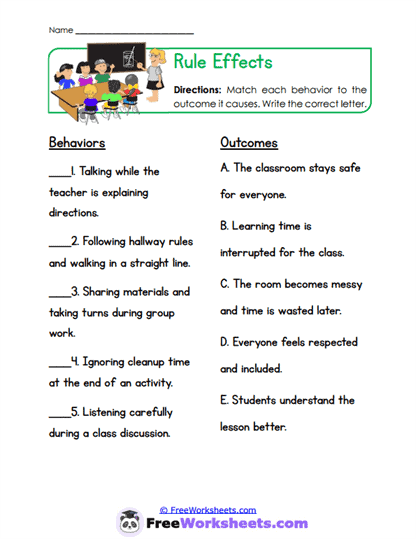
Rule Effects
• What Kids Do – Students match behaviors to their outcomes in the classroom.
• Target Skill – Builds cause-and-effect understanding in behavior.
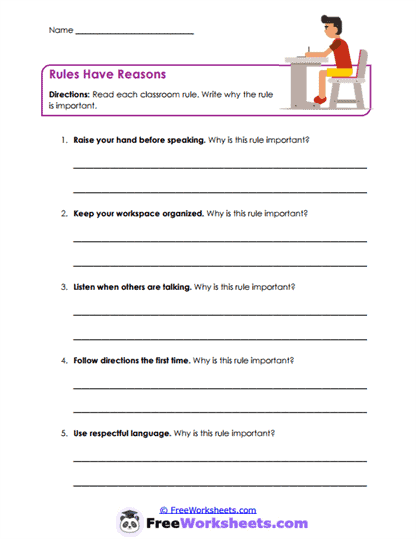
Rules Have Reasons
• What Kids Do – Students explain why classroom rules are important.
• Target Skill – Develops reasoning and understanding of purpose behind rules.
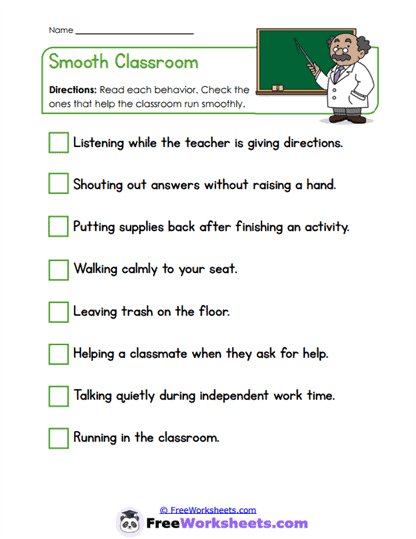
Smooth Classroom
• What Kids Do – Students select behaviors that help the classroom run smoothly.
• Target Skill – Builds awareness of positive classroom habits.