
Behavior Worksheets
Behavior Worksheets help students build essential self-management and decision-making skills for school success. These free, ready-to-print PDF worksheets are designed for immediate classroom use in a variety of learning settings. Students strengthen social awareness, executive functioning, sequencing, and cause-and-effect reasoning through structured, skill-based activities.
Behavior Expectations
About This Collection of Worksheets
Behavior skill development across K-12 plays a pivotal role in creating safe, productive learning environments where academic growth can thrive. Within the framework of the National Curriculum, behavior skills are closely connected to personal development, citizenship, social responsibility, and readiness for lifelong learning. Schools are expected not only to deliver academic content but also to cultivate students who demonstrate self-regulation, respect for others, ethical decision-making, and responsible participation in their communities.
As students progress through grade levels, their behavioral development evolves in complexity. In early primary years, instruction focuses on foundational competencies such as rule awareness, turn-taking, listening skills, emotional identification, and impulse control. These early skills align with National Curriculum priorities related to personal and social capability, helping students build the habits necessary for cooperative learning and classroom participation.
In upper primary and middle grades, students begin applying behavioral expectations with greater independence. They develop perspective-taking skills, conflict resolution strategies, collaborative problem-solving abilities, and goal-setting habits. At this stage, behavior instruction supports curriculum goals connected to citizenship, ethical understanding, and respectful engagement in diverse learning communities. Students are encouraged to reflect on consequences, demonstrate accountability, and contribute positively to group tasks.
By secondary school, behavioral skill development shifts toward higher-level decision-making, independent task management, leadership, digital responsibility, and preparation for post-school pathways. Students are expected to regulate their behavior across varied settings, manage deadlines, navigate peer dynamics, and demonstrate integrity in academic work. These competencies directly support National Curriculum outcomes related to critical thinking, ethical reasoning, and responsible participation in society.
Explicit instruction in expectations, responsibility, and procedural accuracy strengthens both social-emotional growth and academic performance. When behavior skills are taught intentionally-rather than assumed-students are better equipped to engage deeply with academic content. Clear routines, structured reflection, and consistent reinforcement reduce cognitive load, allowing students to focus more effectively on learning objectives.
These worksheets integrate easily into morning meetings, advisory periods, RTI interventions, small-group SEL lessons, homework reflection, substitute plans, and quick formative assessments. Teachers can use them to model classroom norms, reinforce following directions, facilitate peer discussion, and assess how well students apply behavioral expectations in realistic scenarios. Many activities also strengthen literacy skills by requiring close reading, vocabulary application, written justification, sequencing, and evidence-based responses-further aligning with cross-curricular literacy standards embedded in the National Curriculum.
In addition, the materials support key curriculum strands such as:
- Personal and Social Capability: self-awareness, self-management, empathy, and relationship skills
- Ethical Understanding: fairness, integrity, and responsible decision-making
- Intercultural Understanding: respect for diverse perspectives and inclusive behavior
- Civic Responsibility: participation, accountability, and community-minded conduct
Each printable is designed with clean layouts, ink-friendly black-and-white formatting, and clear response spaces that minimize distraction and maximize usability. The low-prep structure allows teachers to print and implement immediately without additional materials or setup. Consistent formatting and straightforward directions make these resources accessible for diverse learners while maintaining academic rigor and behavioral clarity.
By embedding behavior skill instruction within everyday classroom practice, this collection supports schools in meeting National Curriculum expectations while fostering safe, respectful, and high-performing learning environments where all students can succeed.
A Look At The Worksheet Collections
Behavior Expectations
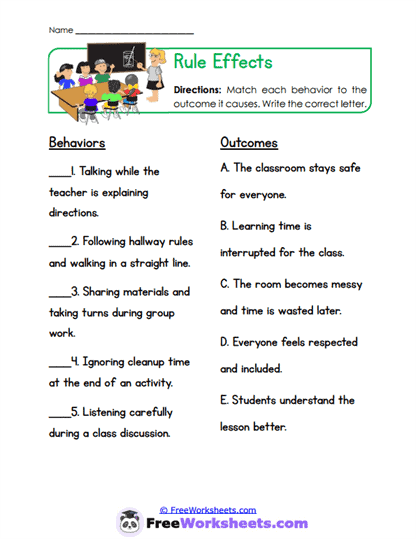
Classroom Rules & Expectations
This collection helps students understand, apply, and reflect on classroom rules that promote safety, respect, and responsibility. Activities guide learners in identifying appropriate behaviors, analyzing real-life scenarios, and explaining the purpose behind shared expectations. The worksheets support consistent classroom management while reinforcing citizenship, self-regulation, and positive participation skills.
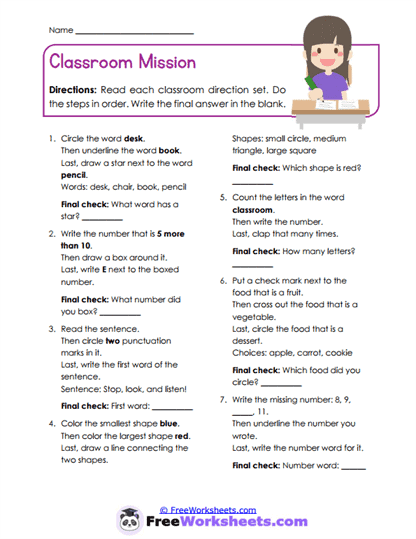
Following Directions
This collection strengthens students’ ability to carefully read, interpret, and accurately complete multi-step directions. Through structured practice, learners build attention to detail, listening skills, sequencing, and task persistence. These activities improve procedural accuracy, reduce careless errors, and support academic success across all subject areas.