
About This Worksheet
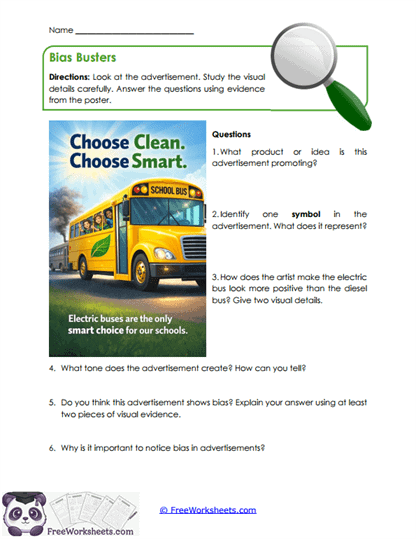
This worksheet is a visual elements activity that focuses on analyzing bias in advertisements. It is designed for Grade 5 students learning to think critically about visuals and messaging. Students examine how images, symbols, and design choices influence opinions. For example, a bright, clean image can make a product seem more appealing than it really is.
Curriculum and Grade Alignment
This worksheet supports Grade 5 students in analyzing visual persuasion and bias. It focuses on understanding how visuals influence readers. It aligns with Common Core RI.5.7 and RI.5.8. It also connects to TEKS 5.9F.
Student Tasks
On this worksheet, students will study an advertisement and answer questions about its message. They identify symbols and visual details that influence the viewer. Students explain how the ad creates a certain tone. They also evaluate whether the ad shows bias and support their answers with evidence.
Common Challenges and Misconceptions
Students may describe the image without analyzing its impact. Others might not recognize bias or persuasive techniques. Some may struggle to explain their thinking clearly. Teachers can model how to look beyond the surface of an image.
Implementation Guidance
Teachers can use this worksheet during lessons on media literacy. It works well for class discussions about advertising. Parents can use it to talk about real-world ads with children. It builds critical thinking and awareness.
Details and Features
The worksheet includes a realistic advertisement and guiding questions. It encourages deeper analysis of visuals. The design is clear and printable. It supports both comprehension and critical thinking.
Curriculum Overlap
Analyzing bias helps students think critically about media and information. This skill supports persuasive writing and argument analysis. It also strengthens decision-making skills in real life.
- Supports media literacy
- Improves persuasive writing
- Builds critical thinking
- Strengthens evaluation skills