
Text Structure Worksheets
Grade 5 Reading Text Structure worksheets help students understand how informational texts are organized to present ideas clearly. These free, ready-to-print PDF worksheets are designed for immediate classroom use and structured skill practice. Students develop comprehension, organization analysis, and critical thinking skills aligned with Common Core standards.
About This Collection of Worksheets
Understanding text structure is essential in Grade 5 as students begin reading more complex informational texts across subjects. These worksheets support Common Core standards by helping learners identify structures such as sequence, cause and effect, compare and contrast, and problem and solution. Recognizing these patterns allows students to better understand how ideas are connected and communicated.
This collection is ideal for use in guided reading, science and social studies integration, homework, literacy centers, and small group instruction. Teachers can also use these activities for RTI support or formative assessments to monitor how well students analyze text organization. The variety of real-world topics keeps students engaged while reinforcing essential reading skills.
Each worksheet is designed with clean layouts and minimal ink usage, making them easy to print and use in both classroom and home environments. The activities are structured, accessible, and low-prep, allowing educators to focus on instruction and meaningful discussion.
Paul’s Teacher Tip
Turn text structure into a pattern-finding challenge instead of a labeling task. Before students read, give them a goal like: “Find the pattern the author is using to organize ideas.” This shifts their focus from just answering questions to actively thinking about how the text is built.
Then, have students “test” their answer by asking: Does every part of the passage fit this structure? If not, they revise their thinking. This helps prevent guessing and builds real understanding.
For struggling learners, highlight signal words together and connect them to one structure at a time. For advanced learners, mix structures within a passage and ask them to explain how the author blends them. This pushes deeper analysis and prepares students for more complex texts.
Worksheet Collection Skill Spotlights
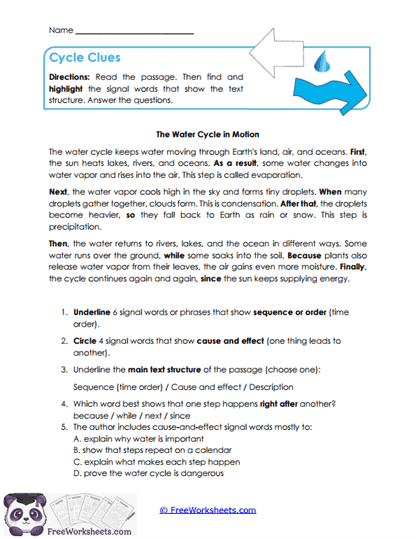
Cycle Clues
- What Kids Do:
Students identify signal words and determine whether a passage uses sequence or cause and effect. - Target Skill:
Builds recognition of signal words and their connection to text organization.
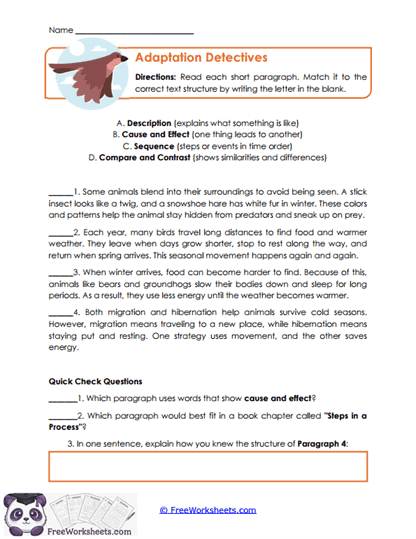
Adaptation Detectives
- What Kids Do:
Learners match short passages to structures like description, sequence, and compare and contrast. - Target Skill:
Strengthens ability to distinguish between multiple text structures.
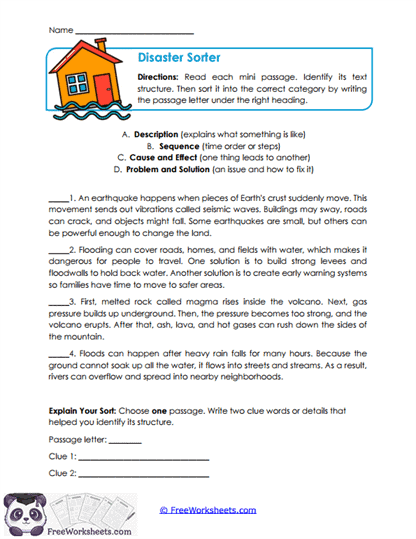
Disaster Sorter
- What Kids Do:
Students sort passages into categories like cause and effect, sequence, and problem and solution. - Target Skill:
Develops classification and analysis of informational text patterns.
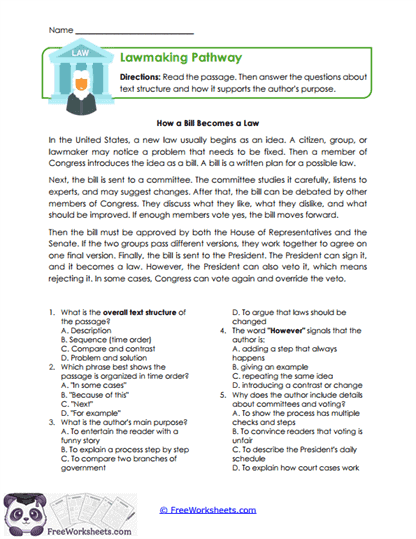
Lawmaking Pathway
- What Kids Do:
Learners analyze a passage about how laws are made and identify sequence structure. - Target Skill:
Builds understanding of step-by-step organization in informational texts.
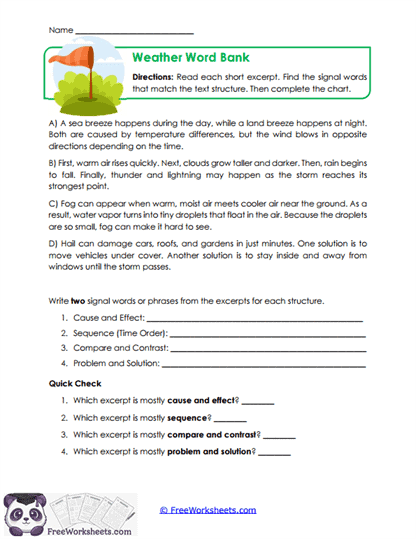
Weather Word Bank
- What Kids Do:
Students identify signal words and match excerpts to the correct structure. - Target Skill:
Enhances recognition and application of structure-specific language.
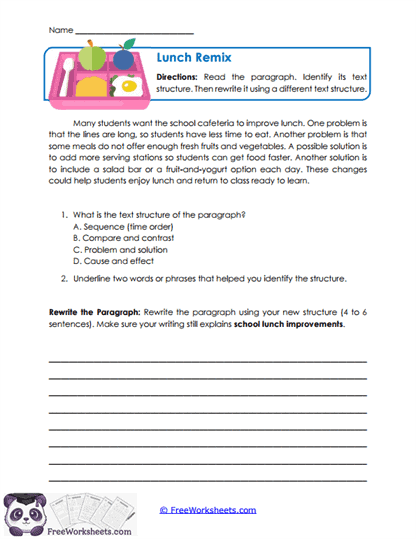
Lunch Remix
- What Kids Do:
Learners rewrite a passage using a different text structure while keeping the meaning. - Target Skill:
Develops flexible thinking and writing using multiple organizational patterns.
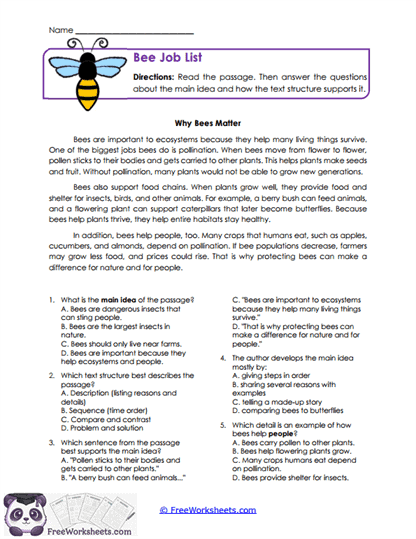
Bee Job List
- What Kids Do:
Students analyze how structure supports the main idea in a passage about bees. - Target Skill:
Builds connection between structure and meaning.
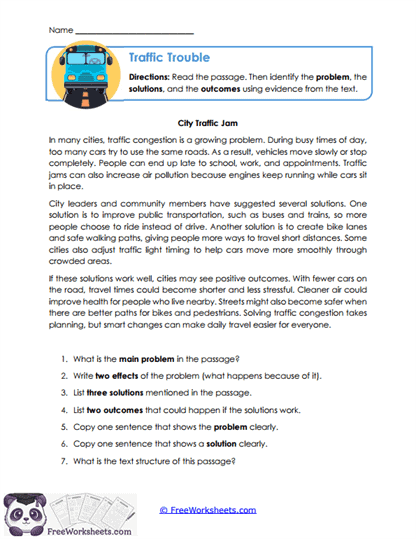
Traffic Trouble
- What Kids Do:
Learners identify a problem, solutions, and outcomes in a real-world passage. - Target Skill:
Strengthens understanding of problem-and-solution structure.
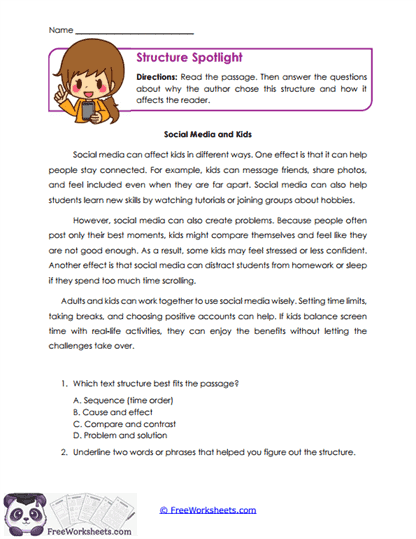
Structure Spotlight
- What Kids Do:
Students identify structure and explain how it affects reader understanding. - Target Skill:
Develops deeper analysis of how organization shapes meaning.
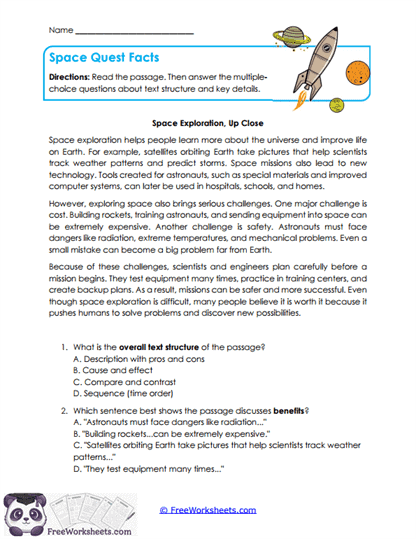
Space Quest Facts
- What Kids Do:
Learners answer questions about structure in a science passage and support answers with evidence. - Target Skill:
Builds evidence-based reasoning for identifying structure.
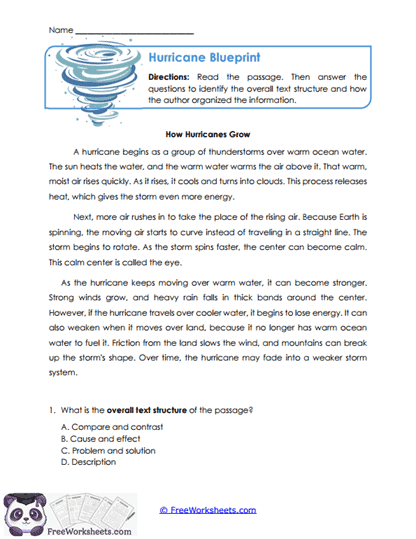
Hurricane Blueprint
- What Kids Do:
Students analyze a science passage and determine if it uses descriptive structure. - Target Skill:
Strengthens understanding of descriptive organization in informational texts.
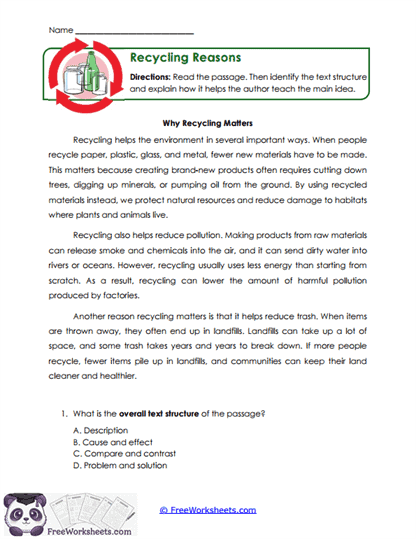
Recycling Reasons
- What Kids Do:
Learners identify cause-and-effect relationships in a passage about recycling. - Target Skill:
Builds ability to connect actions with outcomes in nonfiction texts.