
About This Worksheet
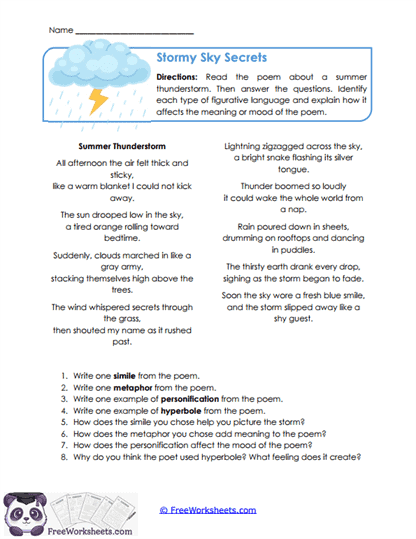
This worksheet is a poetry analysis activity focused on figurative language and mood. It helps Grade 5 students identify simile, metaphor, personification, and hyperbole while explaining how each device shapes meaning and tone. The subject area is English Language Arts. Students build a deeper understanding of how poets use language creatively to paint vivid images and emotions.
Curriculum and Grade Alignment
This activity supports Grade 5 students in analyzing figurative language and its effect on meaning. The primary goal is identifying poetic devices and explaining how they influence mood and imagery. Students should already recognize basic figurative language types. The next step is analyzing their purpose and impact. It aligns with CCSS RL.5.4 and TEKS ELAR 5.6(E).
Student Tasks
On this worksheet, students will read a poem about a thunderstorm. They identify examples of simile, metaphor, personification, and hyperbole. Learners explain how each device affects the mood and meaning. Students answer questions that connect figurative language to imagery. Each task builds analytical thinking and interpretation skills.
Common Challenges and Misconceptions
Students may confuse different types of figurative language. Some may identify examples correctly but struggle to explain their effect. Others might describe the poem instead of analyzing language choices. A common challenge is connecting figurative language to mood. Teachers should guide students to focus on how words create feelings and images.
Implementation Guidance
This worksheet works well for teaching deeper poetry analysis and interpretation. Teachers can model how to identify figurative language and explain its purpose using specific examples. Parents can support by discussing descriptive language in poems or stories. Encouraging students to explain “why the author chose these words” strengthens comprehension. This activity is especially effective for helping students move beyond identification and into meaningful analysis of poetic language.
Details and Features
The worksheet includes a descriptive poem. It provides structured questions for analysis. The layout supports written explanations. It integrates reading and critical thinking. It is printable and classroom-ready.