
About This Worksheet
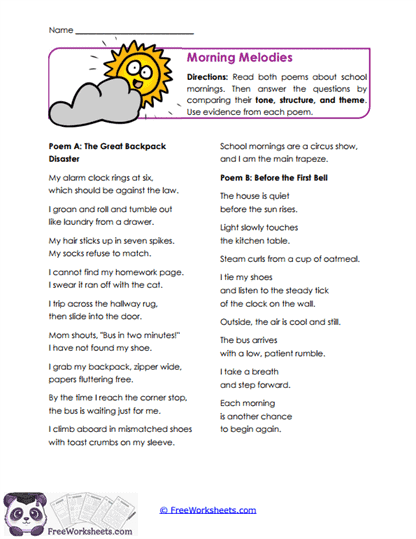
This worksheet is a poetry comparison activity focused on analyzing tone, structure, and theme across two poems. It helps Grade 5 students examine similarities and differences while supporting their ideas with evidence. The subject area is English Language Arts. Students build deeper comprehension by comparing how different poems approach the same topic in unique ways.
Curriculum and Grade Alignment
This activity supports Grade 5 students in comparing texts and analyzing literary elements. The primary goal is identifying similarities and differences in tone, structure, and theme. Students should already understand basic poetry elements. The next step is comparing how those elements vary across texts. It aligns with CCSS RL.5.9 and TEKS ELAR 5.6(H).
Student Tasks
On this worksheet, students will read two poems about school mornings. They compare tone, structure, and theme. Learners use evidence from each poem to support their answers. Students explain how the poems are alike and different. Each task builds comparative analysis and evidence-based reasoning.
Common Challenges and Misconceptions
Students may summarize instead of compare. Some may focus on only one poem. Others might struggle to use evidence from both texts. A common challenge is clearly explaining similarities and differences. Teachers should guide students to reference both poems in each response.
Implementation Guidance
This worksheet works well for teaching text comparison skills. Teachers can model how to compare tone and structure side by side using a think-aloud strategy. Parents can support by asking how two texts are alike and different during reading. Encouraging students to use specific examples from both poems strengthens analysis. This activity is especially effective for helping students develop the ability to evaluate multiple texts thoughtfully and explain their reasoning with clarity.
Details and Features
The worksheet includes two contrasting poems. It provides comparison-based questions. The layout supports written responses. It integrates reading and analysis. It is printable and classroom-ready.