
Poetry Elements Worksheets
Grade 5 Reading Poetry Elements worksheets help students analyze how poets use language, structure, and sound to create meaning. These free, ready-to-print PDF worksheets are designed for immediate classroom use and structured skill practice. Students develop interpretation, analysis, and evidence-based reasoning skills aligned with Common Core standards.
About This Collection of Worksheets
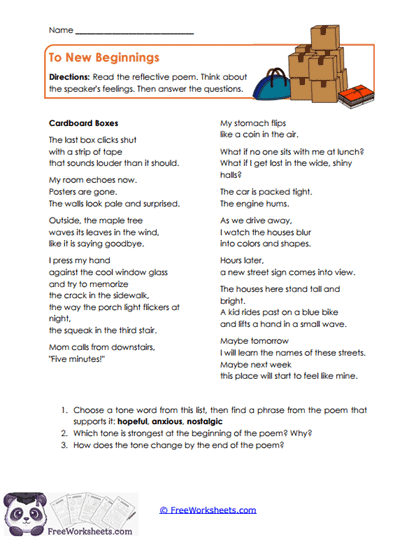
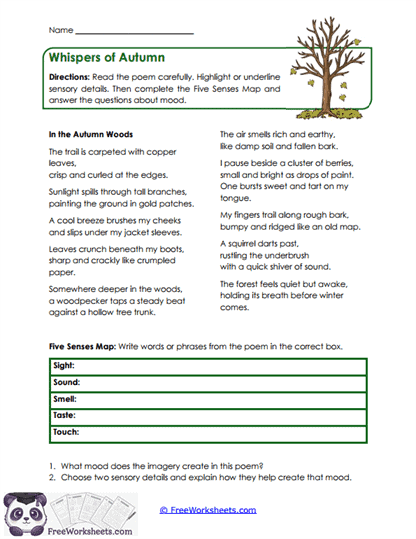
Understanding poetry elements is an important skill in Grade 5, as students learn to analyze how word choice, structure, and sound contribute to meaning. These worksheets support Common Core standards by guiding learners to identify tone, mood, symbolism, and sound devices, as well as compare and interpret poems. This deeper level of analysis helps students build strong comprehension and appreciation for poetry.
This collection is ideal for use in guided reading, poetry units, homework, literacy centers, and small group instruction. Teachers can also use these activities for RTI support or formative assessments to evaluate students’ ability to interpret poetic language and support their thinking with evidence. The variety of poems and tasks ensures students engage with poetry in multiple meaningful ways.
Each worksheet is designed with clean layouts and minimal ink usage, making them easy to print and use in both classroom and home environments. The activities are structured, accessible, and low-prep, allowing educators to focus on discussion, analysis, and deeper learning.

Paul’s Teacher Tip
When teaching poetry, encourage students to slow down and read each poem more than once. The first read helps with basic understanding, but the second read is where deeper meaning often appears. Ask students to focus on specific words and phrases that stand out and consider why the poet chose them. For struggling learners, guide them to identify one element at a time, such as mood or imagery. For advanced learners, challenge them to explain how multiple elements work together to create meaning.
Worksheet Collection Skill Spotlights
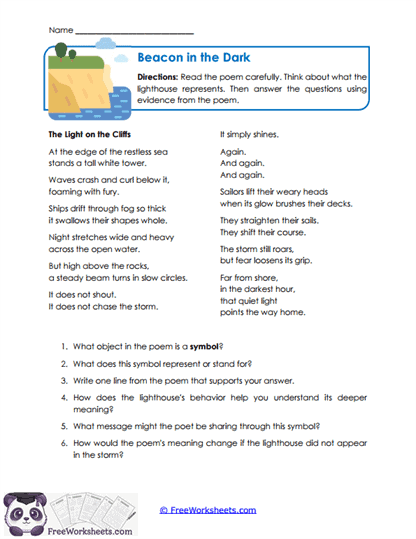
Beacon in the Dark
- What Kids Do:
Students identify a symbol in a poem and explain what it represents using evidence from the text. - Target Skill:
Builds interpretation skills by connecting symbolic elements to deeper meaning.
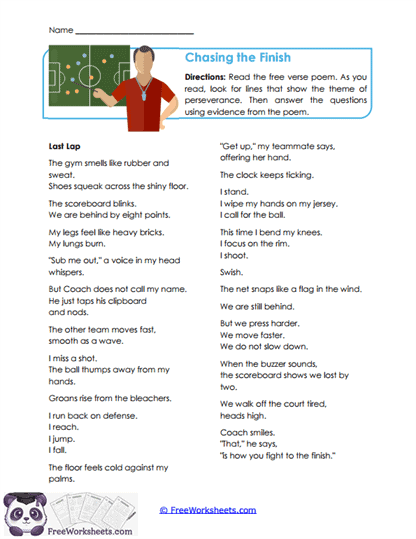
Chasing the Finish
- What Kids Do:
Learners identify the theme of a poem and explain how specific lines support that theme. - Target Skill:
Strengthens theme analysis by connecting evidence to central ideas in poetry.
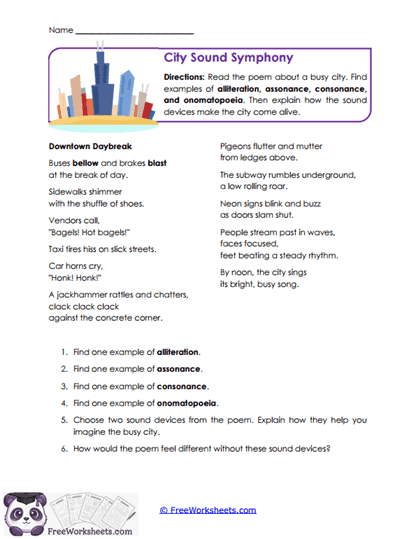
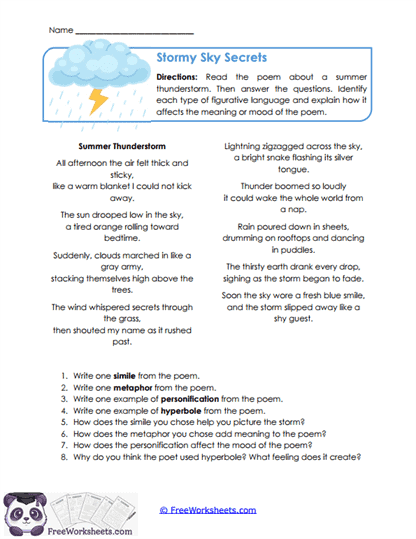
City Sound Symphony
- What Kids Do:
Students identify sound devices like alliteration and onomatopoeia and explain how they enhance imagery. - Target Skill:
Develops understanding of how sound patterns contribute to meaning and rhythm.
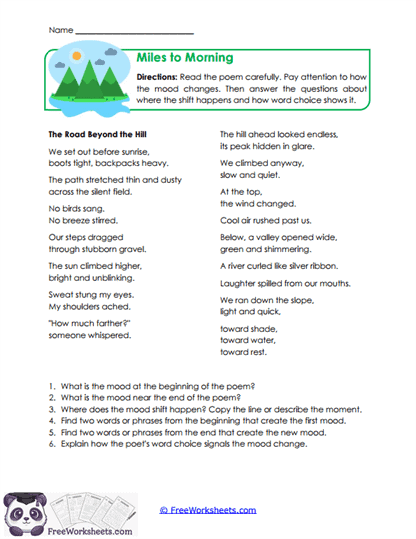
Miles to Morning
- What Kids Do:
Learners track how the mood changes throughout a poem and explain how word choice signals those shifts. - Target Skill:
Builds analysis of tone and mood by examining how language creates emotional progression.
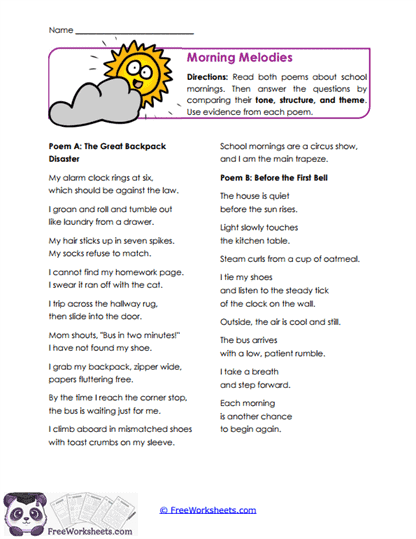
Morning Melodies
- What Kids Do:
Students compare two poems by analyzing similarities and differences in tone, structure, and theme. - Target Skill:
Enhances comparative analysis by evaluating multiple texts with evidence.
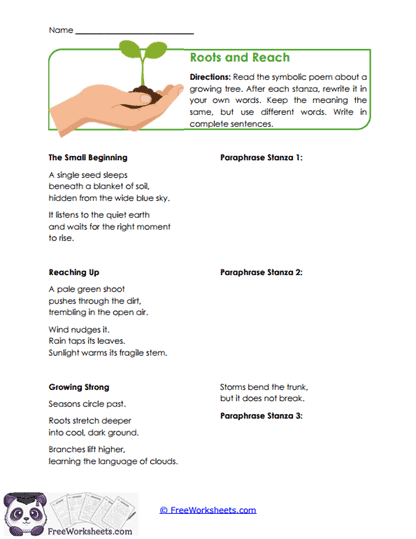
Roots and Reach
- What Kids Do:
Learners paraphrase each stanza of a poem while maintaining its original meaning. - Target Skill:
Develops comprehension by translating figurative and symbolic language into clear ideas.
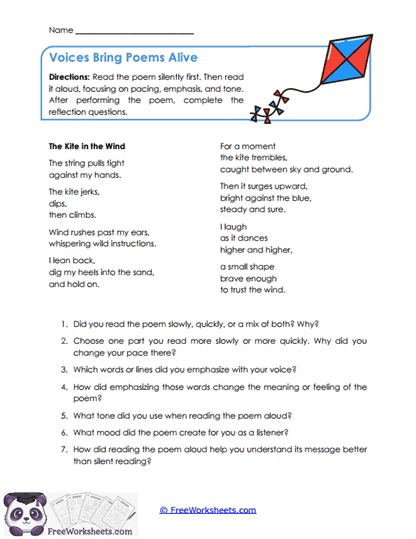
Voices Bring Poems Alive
- What Kids Do:
Students read a poem aloud and reflect on how pacing and expression affect meaning. - Target Skill:
Strengthens fluency and interpretation through expressive reading.
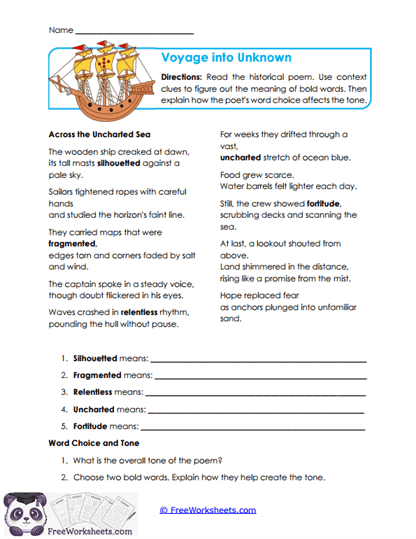
Voyage into Unknown
- What Kids Do:
Learners use context clues to define unfamiliar words and explain how they shape tone. - Target Skill:
Builds vocabulary and tone analysis by connecting word meaning to overall mood.