
About This Worksheet
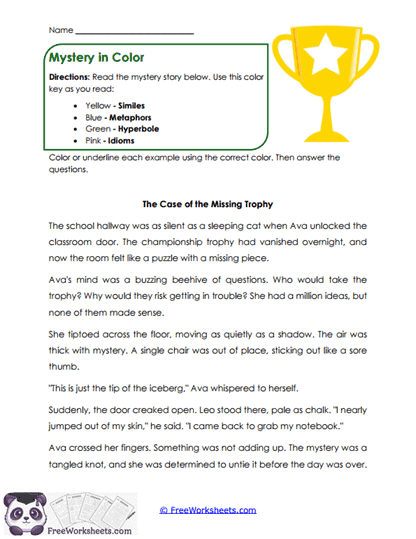
This worksheet is a multi-layered literary analysis activity focused on identifying and categorizing different types of figurative language within a narrative text. It helps Grade 5 students analyze how similes, metaphors, hyperbole, and idioms function together to enhance storytelling. The subject area is English Language Arts. Students use a color-coding system to actively engage with the text, making abstract language concepts more concrete and visual. This approach strengthens both comprehension and analytical precision.
Curriculum and Grade Alignment
This activity is designed for Grade 5 students developing advanced figurative language analysis skills. The primary goal is identifying multiple types of figurative language and understanding how they contribute to meaning and tone. Students should already recognize basic figurative devices. The next step is analyzing how different devices work together within a single passage. It aligns with CCSS L.5.5 and RL.5.4 and TEKS ELAR 5.7(D), emphasizing interpretation and application of figurative language in context.
Student Tasks
On this worksheet, students will read a mystery passage carefully. They identify and color-code examples of similes, metaphors, hyperbole, and idioms. Learners analyze how each example contributes to the story’s mood and meaning. Students answer comprehension and analysis questions. Each task builds layered understanding and encourages active reading strategies.
Common Challenges and Misconceptions
Students may confuse different types of figurative language, especially metaphors and similes. Some may struggle to identify idioms or interpret them correctly. Others might focus only on finding examples without understanding their purpose. A common challenge is analyzing how multiple devices work together. Teachers should emphasize both identification and explanation.
Implementation Guidance
This worksheet works especially well for interactive and visual learning lessons. Teachers can model how to color-code examples and explain their meaning. Parents can support by discussing figurative expressions in everyday language. Encouraging students to explain why each example fits its category strengthens understanding. This activity is particularly effective for helping students organize complex concepts and deepen their analysis of literary texts.
Details and Features
The worksheet includes a mystery-themed passage. It features a color-coded key for figurative language types. The layout supports active engagement and annotation. It integrates reading, analysis, and visual learning. It is printable and classroom-ready.