
Informational Texts Worksheets
Grade 5 Reading Informational Texts worksheets help students analyze nonfiction texts and understand how information is organized and presented. These free, ready-to-print PDF worksheets are designed for immediate classroom use and structured skill practice. Students develop main idea, text structure, and evidence-based comprehension skills aligned with Common Core standards.
About This Collection of Worksheets
Informational text skills are essential in Grade 5 as students engage with more complex nonfiction content across subjects. These worksheets support Common Core standards by helping learners identify main ideas, analyze text structure, use context clues, and evaluate evidence. This practice prepares students to read and understand academic content in science, social studies, and beyond.
This collection is ideal for use in guided reading, morning work, homework, literacy centers, and small group instruction. Teachers can also use these activities for RTI support or formative assessments to monitor comprehension and analytical thinking. The variety of real-world and science-based topics keeps students engaged while strengthening critical reading skills.
Each worksheet is designed with clean layouts and minimal ink usage, making them easy to print and use in both classroom and home environments. The activities are structured, accessible, and low-prep, allowing educators to focus on meaningful instruction and discussion.
Paul’s Teacher Tip
When teaching informational texts, encourage students to ask, “What is the author trying to teach me?” and “How is this information organized?” Many students focus on interesting facts instead of the main idea, so model how to group details together and connect them to a central concept. For struggling learners, provide sentence frames for identifying main idea and supporting details. For advanced students, challenge them to compare how different texts present information on the same topic.
Worksheet Collection Skill Spotlights
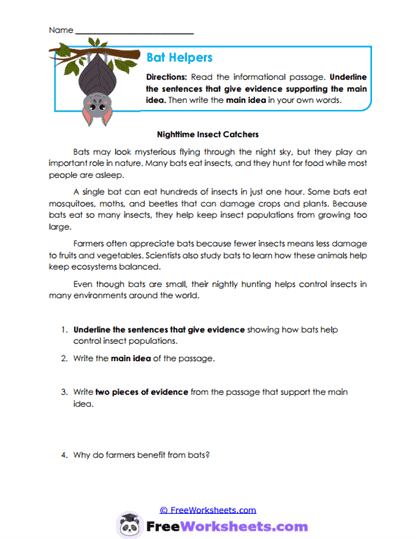
Bat Helpers
- What Kids Do:
Students read an informational passage, underline key evidence, and identify the main idea with supporting details. - Target Skill:
Builds comprehension by connecting evidence directly to central ideas in nonfiction text.
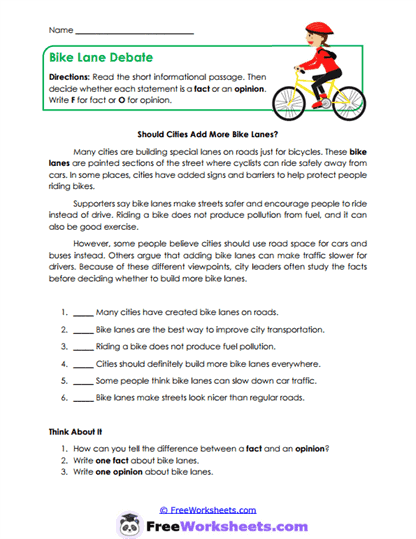
Bike Lane Debate
- What Kids Do:
Learners read a passage and classify statements as fact or opinion, then reflect on their reasoning. - Target Skill:
Develops critical thinking by distinguishing between factual information and opinion-based claims.
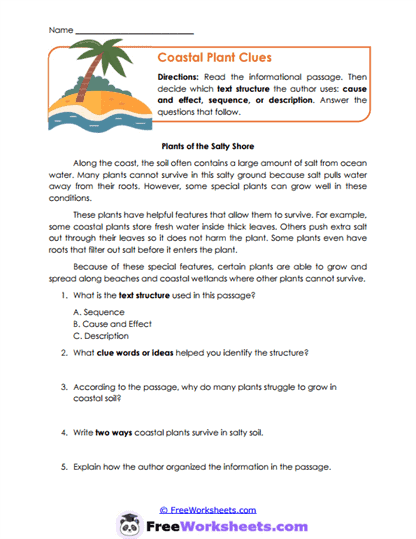
Coastal Plant Clues
- What Kids Do:
Students analyze a passage to determine its text structure and identify clues that support their answer. - Target Skill:
Strengthens understanding of informational organization and how structure shapes meaning.
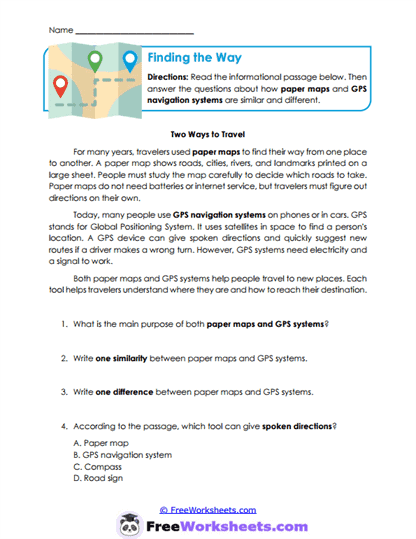
Finding the Way
- What Kids Do:
Learners compare maps and GPS systems by identifying similarities and differences using evidence. - Target Skill:
Enhances comparative analysis by evaluating multiple ideas within informational texts.
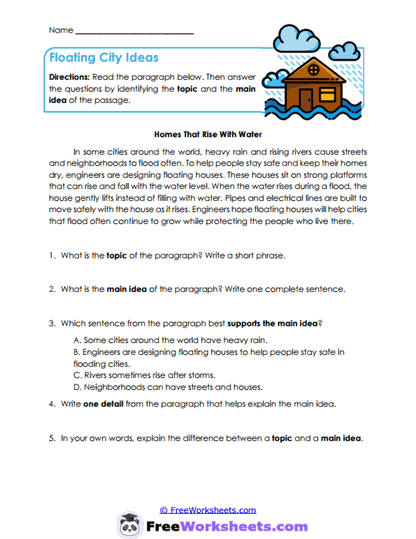
Floating City Ideas
- What Kids Do:
Students identify the topic and main idea of a passage and explain the difference between them. - Target Skill:
Builds clarity in understanding informational text by distinguishing general topics from specific main ideas.
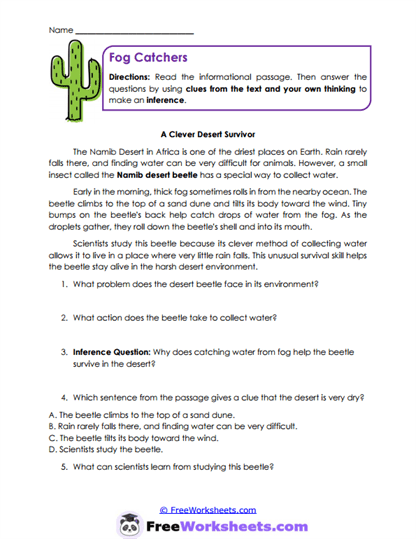
Fog Catchers
- What Kids Do:
Learners read a science-based passage and answer comprehension and inference questions using evidence. - Target Skill:
Develops advanced reasoning by combining text evidence with logical thinking.
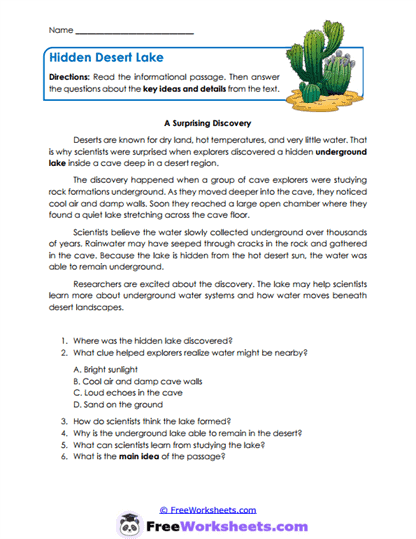
Hidden Desert Lake
- What Kids Do:
Students read an informational passage and answer questions to identify key ideas and details. - Target Skill:
Strengthens comprehension by analyzing factual content and supporting answers with evidence.
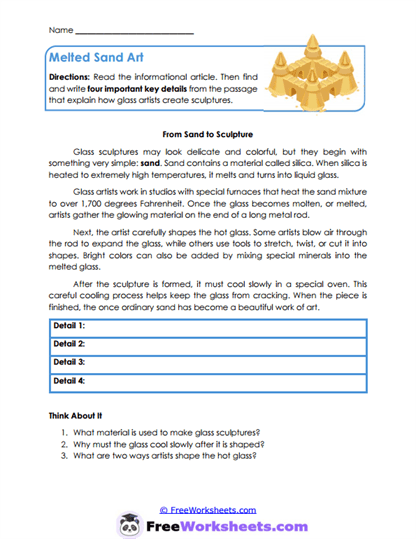
Melted Sand Art
- What Kids Do:
Learners read a passage about a process and identify key steps, organizing them in sequence. - Target Skill:
Builds procedural understanding by analyzing how steps connect to form a complete process.
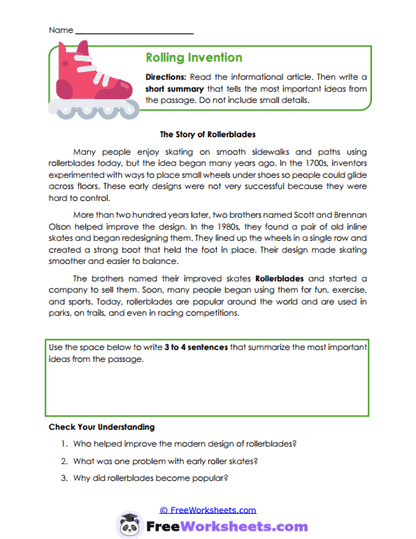
Rolling Invention
- What Kids Do:
Students read a passage and write a short summary focusing on the most important ideas. - Target Skill:
Enhances summarization skills by prioritizing key information over minor details.
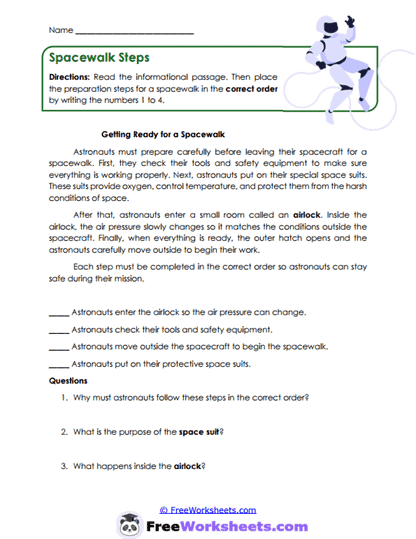
Spacewalk Steps
- What Kids Do:
Learners read a procedural passage and arrange steps in the correct order while explaining their reasoning. - Target Skill:
Develops sequencing skills by understanding logical order in informational text.
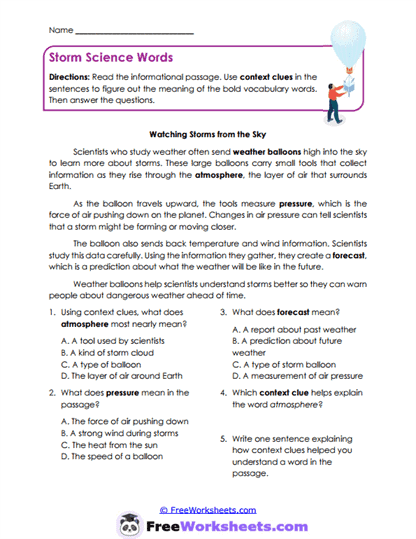
Storm Science Words
- What Kids Do:
Students use context clues to determine the meaning of unfamiliar vocabulary in a passage. - Target Skill:
Improves vocabulary and comprehension by using surrounding text to unlock meaning.
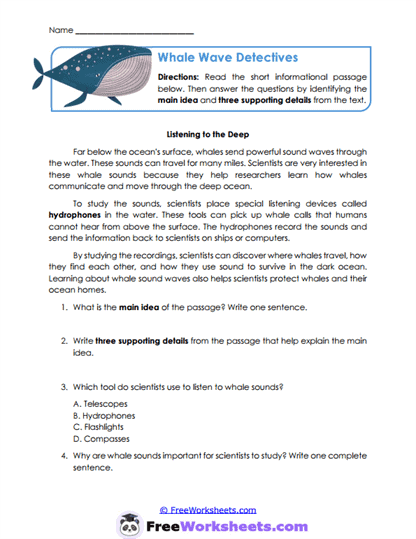
Whale Wave Detectives
- What Kids Do:
Learners read a science-based passage and identify the main idea along with multiple supporting details. - Target Skill:
Builds strong summarization skills by connecting details to a central concept.