
Grade 5 Reading Comprehension Worksheets
These worksheets strengthen higher-level reading skills across both informational and literary texts. Students practice identifying main ideas, analyzing theme and character development, determining author's purpose, recognizing text structure, summarizing accurately, explaining cause-and-effect chains, citing text evidence, shifting point of view, and interpreting mood and tone. Each worksheet includes structured response spaces that support clear thinking, strong writing, and evidence-based answers.
About This Collection of Worksheets
Grade 5 readers move beyond basic “what happened” questions and into deeper analysis: What is the author trying to teach? How do details work together? Which words prove your answer? This collection builds those skills with a mix of science, history, and real-world informational texts alongside engaging narratives.
Students will work on both informational standards (finding main ideas, explaining relationships, analyzing structure, quoting accurately) and literary standards (theme, character development, point of view, mood, tone). Several worksheets include an extra layer of rigor-such as explaining how a chosen detail supports the main idea, writing a structured five-sentence summary, or rewriting a passage from a different point of view.
These resources are ideal for reading workshop, test-prep practice, small-group instruction, literacy centers, and cross-curricular units (science/social studies).
Paul’s Teacher Tip
This is a great set for helping students move from simple answers to stronger explanations. After each activity, ask students to point to the exact words that helped them decide-this builds the habit of using evidence. For extra support, model one strong response and break down why it works. You can also have students compare two answers and decide which one is better and why. Over time, this helps students understand that it’s not just about being right-it’s about proving it clearly.
Worksheet Collection Skill Spotlights
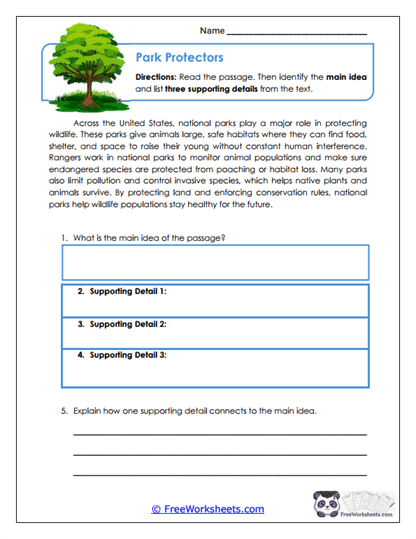
Park Protectors (Main Idea + Supporting Details)
• What Kids Do – Students read an informational text, identify the main idea, list supporting details, and explain how one detail connects.
• Target Skill – Builds main idea identification and explanation of supporting evidence.
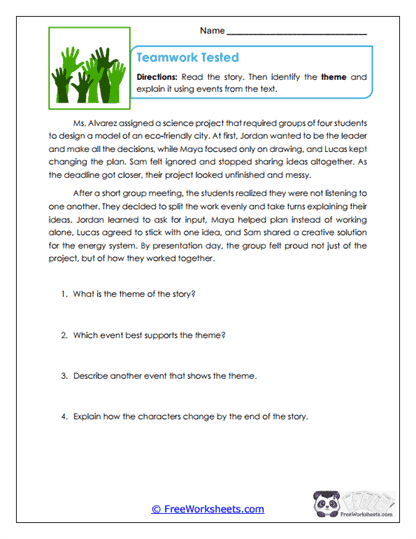
Teamwork Tested (Theme + Character Change)
• What Kids Do – Students read a story, identify the theme, and explain how character actions and changes support it.
• Target Skill – Develops theme analysis and character development.
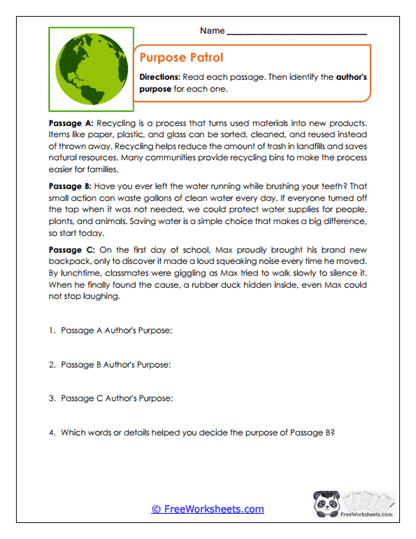
Purpose Patrol (Author’s Purpose Across Multiple Passages)
• What Kids Do – Students read short passages, identify the author’s purpose, and explain which words reveal it.
• Target Skill – Builds analysis of author’s purpose using text evidence.
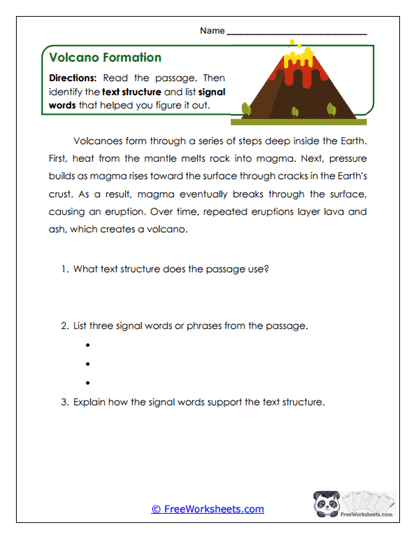
Volcano Formation (Text Structure: Sequence + Signal Words)
• What Kids Do – Students identify sequence structure and highlight signal words that show order.
• Target Skill – Develops understanding of text structure and signal words.
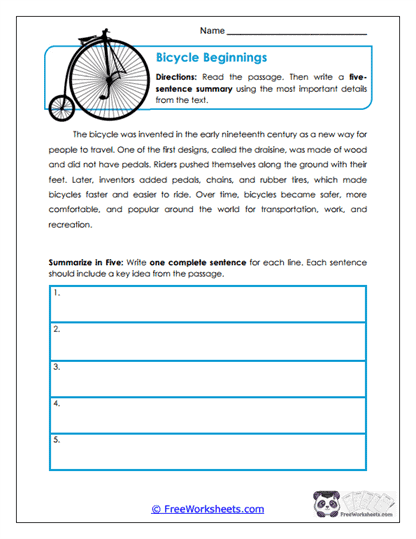
Bicycle Beginnings (Five-Sentence Informational Summary)
• What Kids Do – Students read a passage and write a five-sentence summary using key ideas in order.
• Target Skill – Builds organized summary writing and paraphrasing.
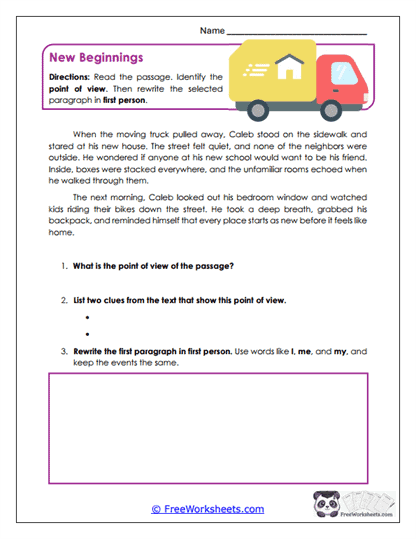
New Beginnings (Point of View + Rewrite Task)
• What Kids Do – Students identify point of view and rewrite part of the passage from a different perspective.
• Target Skill – Develops point of view analysis and perspective shifting.
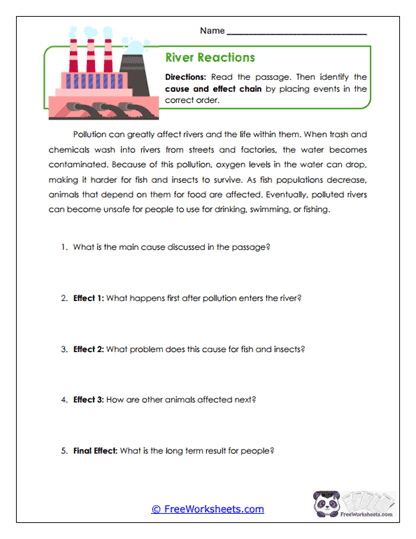
River Reactions (Cause and Effect Chain)
• What Kids Do – Students identify a main cause and trace multiple effects in sequence using the text.
• Target Skill – Builds multi-step cause-and-effect reasoning.
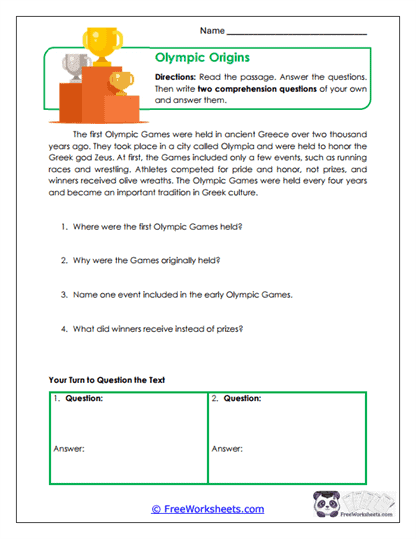
Olympic Origins (Answer + Generate Questions)
• What Kids Do – Students answer questions and create their own text-based questions with answers.
• Target Skill – Develops questioning skills and evidence-based comprehension.
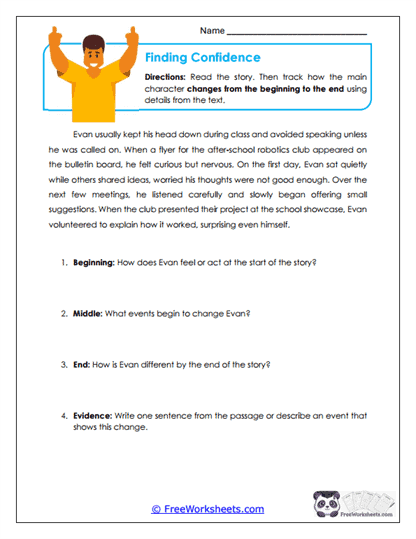
Finding Confidence (Character Development: Beginning-Middle-End)
• What Kids Do – Students track how a character changes across the story using evidence from different parts.
• Target Skill – Builds understanding of character development over time.
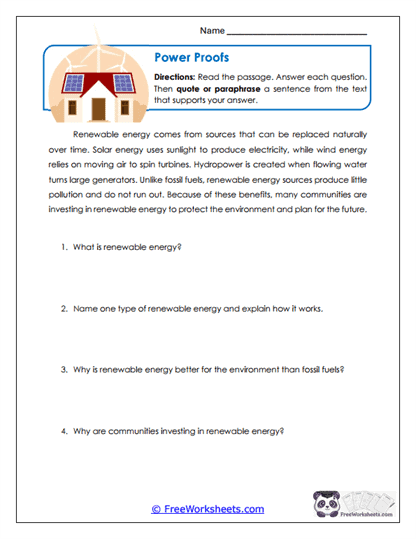
Power Proofs (Informational Q&A With Text Evidence)
• What Kids Do – Students answer questions and support each response with quotes or paraphrased evidence.
• Target Skill – Develops use of textual evidence in responses.
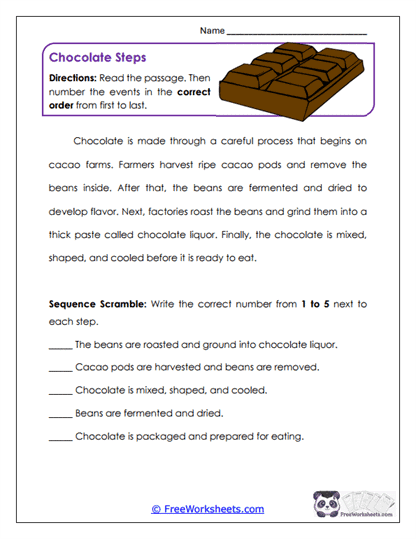
Chocolate Steps (Sequencing a Process)
• What Kids Do – Students read about a process and ترتیب steps in the correct order using signal words.
• Target Skill – Builds sequencing skills and understanding of procedural texts.
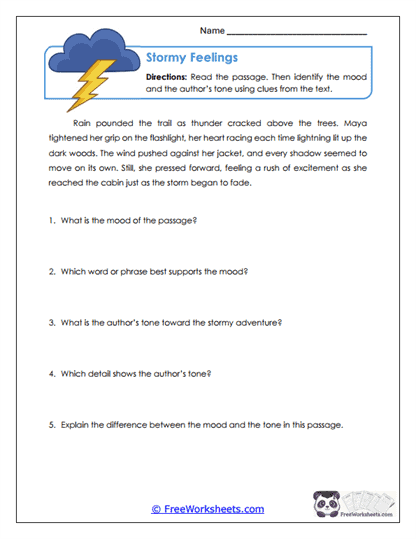
Stormy Feelings (Mood vs. Tone With Evidence)
• What Kids Do – Students identify mood and tone and support both with words or phrases from the text.
• Target Skill – Develops understanding of mood vs. tone using evidence.