
Characters of Stories Worksheets
Grade 5 Reading Characters of Stories worksheets help students analyze character traits, motivations, and development across texts. These free, ready-to-print PDF worksheets are designed for immediate classroom use and structured skill practice. Students develop character analysis, inference, and evidence-based reasoning skills aligned with Common Core standards.
About This Collection of Worksheets
Analyzing characters is a key focus in Grade 5 reading, as students move beyond identifying basic traits to understanding motivations, changes, and relationships. These worksheets support Common Core standards by helping learners examine how characters think, act, and evolve throughout a story. This deeper level of analysis strengthens comprehension and prepares students for more advanced literary interpretation.
This collection is highly versatile and can be used for morning work, guided reading, homework, literacy centers, and small group instruction. Teachers can also use these activities for RTI intervention or formative assessment to evaluate how well students interpret character traits and support their thinking with evidence. The variety of formats encourages engagement while reinforcing essential analytical skills.
Each worksheet is designed with clear layouts and minimal ink usage, making them easy to print and implement in both classroom and home settings. The activities are accessible, structured, and low-prep, allowing educators to focus on meaningful instruction and discussion.

Paul’s Teacher Tip
When teaching character analysis, encourage students to always ask, “What does this action show about the character?” Many students can identify traits but struggle to connect them to evidence. Model how to underline key details such as actions, dialogue, and thoughts that reveal personality. For students who need extra support, provide a list of common traits and guide them in matching evidence to each one. For advanced learners, challenge them to track how a character changes over time and explain how those changes connect to the story’s theme.
Worksheet Collection Skill Spotlights
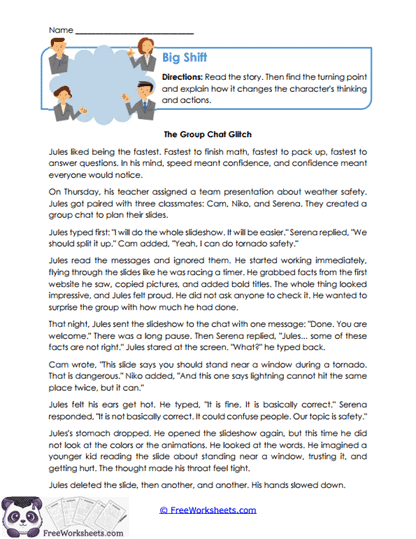
Big Shift
- What Kids Do:
Students read a narrative and identify the turning point, then explain how it changes the character’s thinking and behavior. - Target Skill:
Develops understanding of cause-and-effect relationships in character transformation and narrative progression.
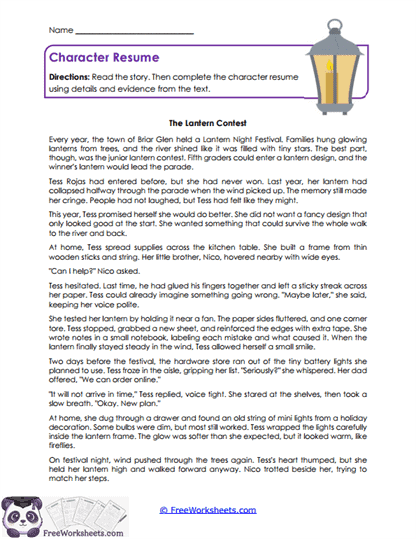
Character Resume
- What Kids Do:
Learners organize details about a character’s traits, actions, and experiences into a structured “resume” format using text evidence. - Target Skill:
Strengthens summarization and organization by synthesizing key character information into a coherent profile.
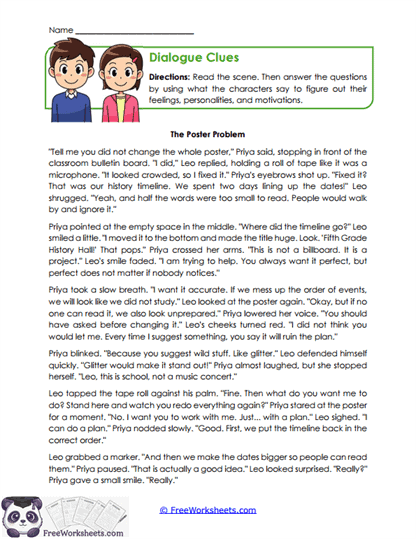
Dialogue Clues
- What Kids Do:
Students analyze a conversation-based passage and determine character traits and relationships based on dialogue. - Target Skill:
Builds interpretation of spoken language to reveal personality, motivation, and interpersonal dynamics.
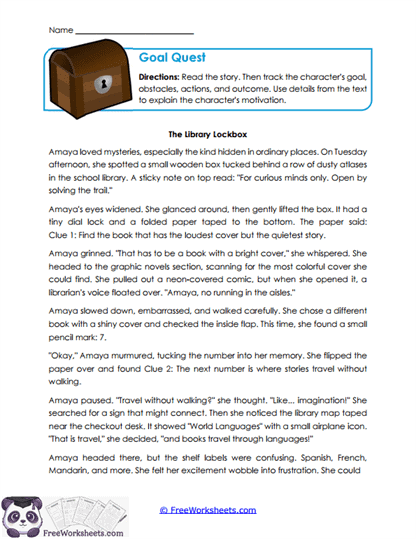
Goal Quest
- What Kids Do:
Learners identify a character’s goal, obstacles, and outcomes, then explain how these elements are connected. - Target Skill:
Enhances understanding of motivation and plot structure through analysis of goals and challenges.
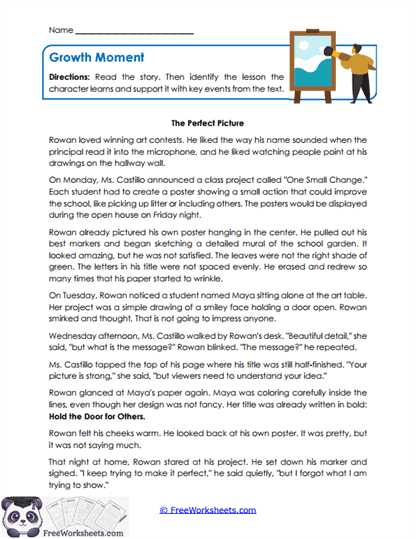
Growth Moment
- What Kids Do:
Students read a story and determine the lesson a character learns, supporting their answer with evidence. - Target Skill:
Develops theme connection by linking character experiences to lessons and personal growth.
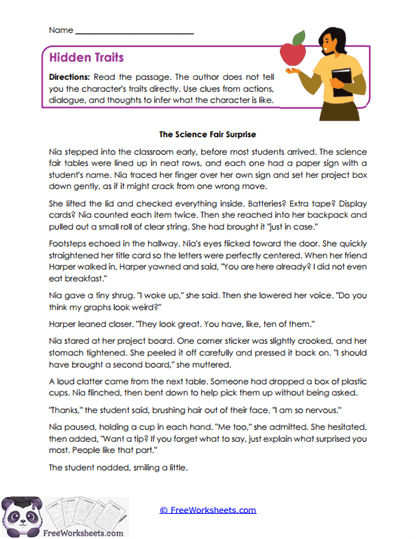
Hidden Traits
- What Kids Do:
Learners infer character traits by examining actions, thoughts, and dialogue within a passage. - Target Skill:
Strengthens inferential reasoning by drawing conclusions from indirect textual evidence.
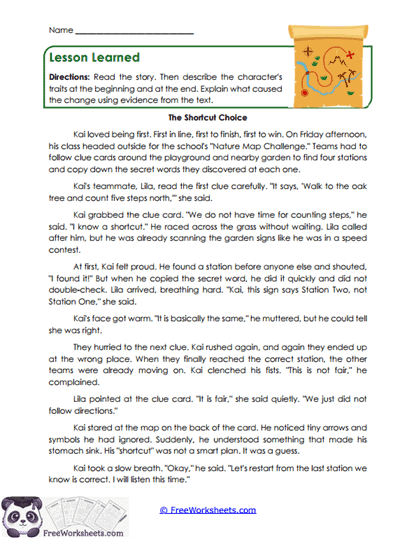
Lesson Learned
- What Kids Do:
Students compare a character’s traits at the beginning and end of a story to explain how they change. - Target Skill:
Builds analysis of character development by tracking growth over time using supporting details.
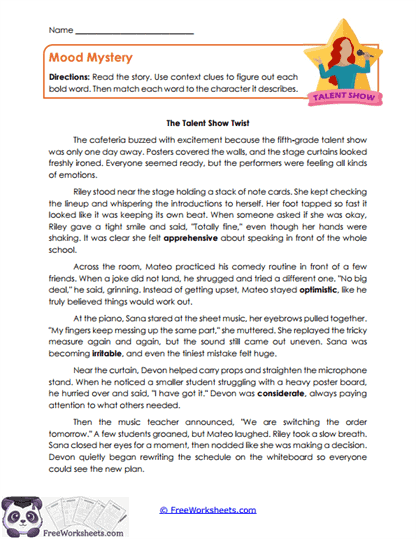
Mood Mystery
- What Kids Do:
Learners analyze bolded vocabulary in a passage to determine character emotions and match them to feelings. - Target Skill:
Enhances vocabulary interpretation and emotional understanding through context-based analysis.
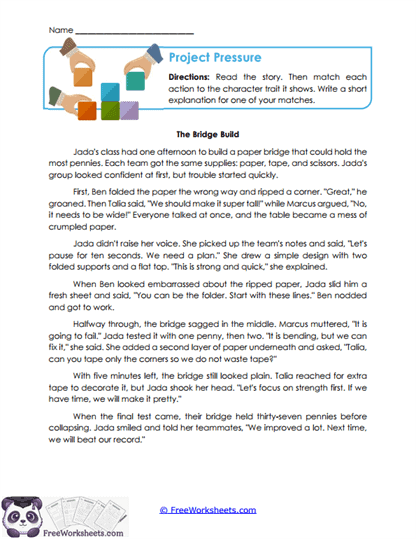
Project Pressure
- What Kids Do:
Students examine character actions and match them to appropriate traits, explaining their reasoning. - Target Skill:
Develops evidence-based inference by connecting behavior to personality characteristics.
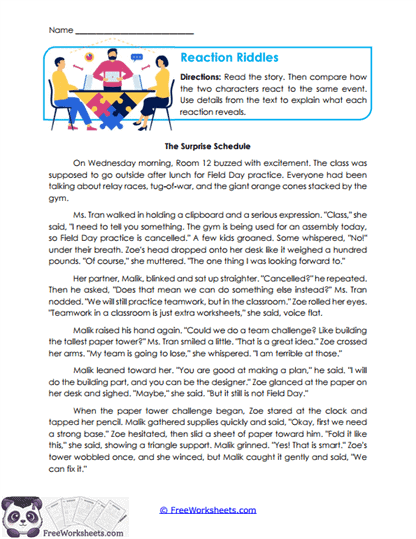
Reaction Riddles
- What Kids Do:
Learners compare how two characters respond to the same situation and explain what each reaction reveals. - Target Skill:
Strengthens comparative analysis and perspective-taking by evaluating differing character responses.
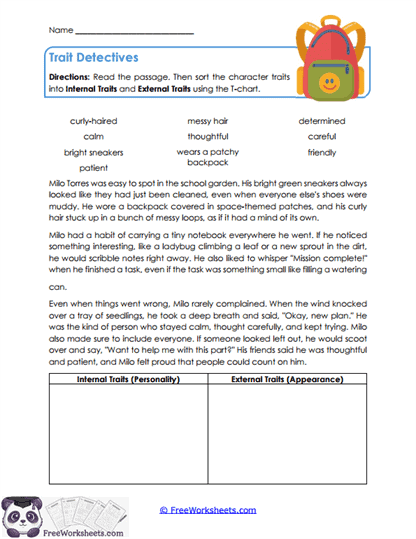
Trait Detectives
- What Kids Do:
Students identify and sort traits into internal and external categories using details from a passage. - Target Skill:
Builds classification skills by distinguishing between physical characteristics and personality traits.
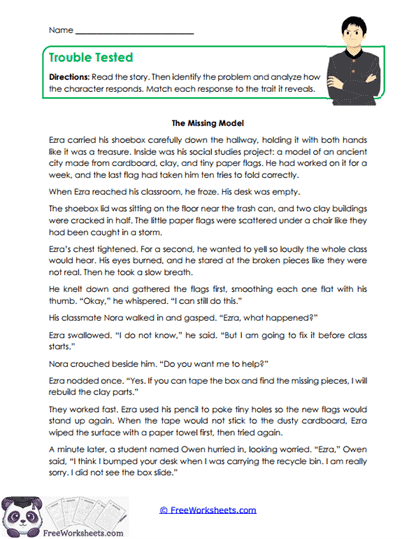
Trouble Tested
- What Kids Do:
Learners analyze how a character responds to a problem and match the response to a specific trait. - Target Skill:
Enhances understanding of character behavior by linking problem-solving actions to personality traits.